

Last Updated: October 29, 2026
Quick Summary
To identify high quality heirloom gemstones, check for documented origin, color that holds up in indirect daylight, minimal treatment disclosed in writing, and a cut that returns light across the whole face. There is no single universal grading scale for colored stones, so each gem is judged against its own species.
- Color drives price more than any other factor in colored stones, so judge it in indirect daylight.
- Clarity standards shift by gem type, so expect some inclusions in emeralds and near-clean sapphires and rubies.
- A 2.70ct stone with weak color loses to a 1.95ct stone with strong color, since weight is the weakest quality measure.
- A 10x loupe, gem gauge, refractometer, spectroscope, and microscope let a jeweler read what the eye cannot.
- Get a written appraisal covering species, carat weight, treatment disclosure, origin report, and replacement value before you reset or sell.
Table of Contents
- What Separates Heirloom Gemstones From Ordinary Stones
- Judging Gemstone Color, Clarity, Cut, and Carat
- How to Tell If a Gemstone Is Natural or Synthetic
- Gemstone Identification Tools a Jeweler Uses
- Why Heirloom Gemstone Appraisal Matters Before You Reset or Sell
- Common Mistakes That Undervalue an Inherited Stone
- Book a Studio Evaluation for Your Heirloom Gemstone
- Frequently Asked Questions
What Separates Heirloom Gemstones From Ordinary Stones
Heirloom gemstones are stones with the color, clarity, and provenance to hold their value for generations. Learning how to identify high quality heirloom gemstones starts with one fact: there is no single universal grading scale for colored stones. At Eklektic, we evaluate stones in our Houston studio against the specific gem in front of us, not a generic label.
The market reflects that demand. According to Future Market Insights' 2026 gemstone market forecast, the U.S. gemstone market is projected to reach USD 13.50 billion in 2026 and grow at a 6.3% annual rate through 2036.
So what separates an heirloom stone from an ordinary one? Four things:
- Origin with documentation - a report naming the country or region
- Color that holds up in daylight, not just under store lights
- Minimal treatment, disclosed in writing
- Cut quality that returns light instead of leaking it
A pretty stone is not automatically an heirloom stone. The paperwork and the physical traits have to agree.
Judging Gemstone Color, Clarity, Cut, and Carat
Gemstone color, clarity, cut, and carat work differently than they do for diamonds. Color usually carries the most weight, while clarity standards shift by gem type. A flawless emerald is rarer than a flawless diamond, so visible inclusions are judged against what is normal for that species.
Color: The Strongest Price Driver
Color drives price more than any other factor in colored stones. Hue, tone, and saturation all matter, and the trade pays premiums for vivid or royal-blue profiles and for stones from prestigious locations, according to AfricaGems' 2026 heirloom quality guide.
Judge color in indirect daylight, never under a jeweler's lamp. A stone that looks electric in the case can look flat by the window.
Clarity, Cut, and Carat in Plain Terms
Clarity describes how visible the internal inclusions are. Cut is how well the facets return light. Carat is weight, and it matters least on its own.
- Clarity: expect some inclusions in emeralds; expect near-clean sapphires and rubies
- Cut: a well-cut stone sparkles across the whole face, not just the center
- Carat: a 2.70ct stone with weak color loses to a 1.95ct stone with strong color
Weight is the easiest number to sell and the weakest measure of quality.
How to Tell If a Gemstone Is Natural or Synthetic
A natural gemstone formed in the earth; a synthetic one was grown in a lab with the same chemistry. Telling them apart by eye is unreliable, which is why the Gemological Institute of America uses advanced instruments to determine a stone's origin, whether it has been treated, and whether it is natural or lab-grown, per GIA's guide to analyzing colored stones.
Watch out: a "natural" label means no treatments were applied, while "treated" or "undetermined" appears when a lab cannot confirm the original color, per the American Gem Trade Association buying guide.
If you are weighing natural against lab-grown, our guide to lab-grown vs natural diamonds breaks down how the two differ in price and long-term value.
Gemstone Identification Tools a Jeweler Uses
Gemstone identification tools let a jeweler read what the eye cannot.
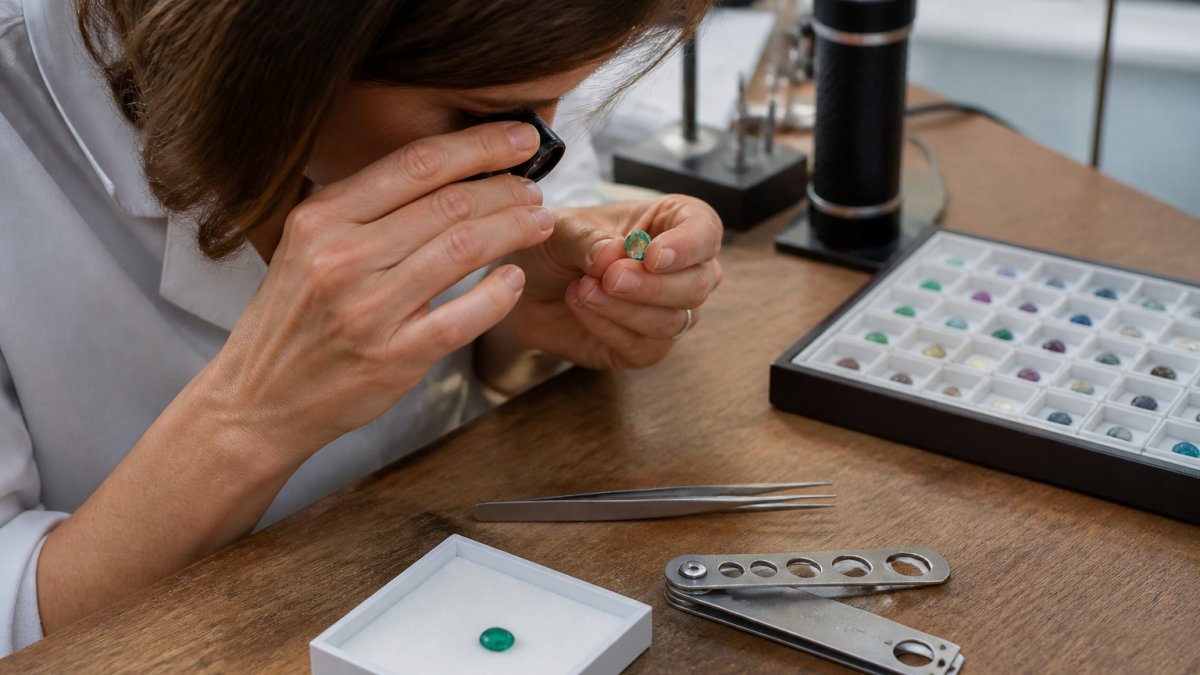
Here is what each tool does:
- Loupe (10x): spots inclusions, scratches, and surface-reaching fractures
- Gem gauge: measures stone dimensions in millimeters
- Refractometer: reads refractive index to narrow the species
- Spectroscope: reveals absorption bands tied to specific gems
- Microscope: finds treatments like fracture filling
Documentation matters as much as the stone itself.
Colombian Emerald - Oval - 2.70ct →
Why Heirloom Gemstone Appraisal Matters Before You Reset or Sell
An heirloom gemstone appraisal establishes what a stone is and what it is worth before anyone touches the setting. Reset a stone without a baseline and you lose the record that proves its identity and value later.
Traceability research is moving fast, including machine-learning origin work, blockchain records, and age-dating of gems, per National Jeweler's colored stone research report. Documentation is becoming the norm, not a nicety.
Before you reset or sell, get a written appraisal that covers:
- Species and variety
- Carat weight and measurements
- Treatment disclosure
- Origin report, if one exists
- Replacement value in USD
Want to know what that report actually includes? Read what's in a professional jewelry appraisal report before you book.
Common Mistakes That Undervalue an Inherited Stone
Most inherited stones lose value through handling, not through any flaw in the gem. The damage usually happens before anyone realizes it.
The biggest offenders:
- Cleaning with ultrasonic or steam on a treated or fracture-filled stone
- Storing loose stones together, where harder gems scratch softer ones
- Resetting without an appraisal, erasing the value baseline
- Assuming "old" means "valuable" without checking treatment and origin
- Losing the original paperwork, which is often worth as much as the stone
If you are planning a reset, our guide to redesigning inherited jewelry into modern rings shows how to change the setting without losing value. And if the piece is sitting unworn, these ways to protect inherited jewelry cover storage, wear, and cleaning.
Book a Studio Evaluation for Your Heirloom Gemstone
Bringing a stone to a studio beats guesswork. At our Houston studio, we examine the gem, review any paperwork, and explain what you have before recommending a next step. If you are searching for heirloom gemstone evaluation near me, a studio visit gives you answers a photo cannot.
Our team brings three generations of custom jewelry making experience, and each piece is made by hand on-site. We handle custom design, repair, restoration, and appraisals under one roof.
If you are deciding where to take a stone for evaluation or repair, our comparison of a custom jewelry studio vs a jewelry store for repairs explains why a studio suits this work.
Our loose Colombian emeralds show what documented quality looks like in practice. The 2.70ct oval is listed with a GIA origin report:
| Stone | Weight | Cut | Price |
|---|---|---|---|
| Colombian Emerald, Oval | 2.70ct | Oval Brilliant | $12,000.00 |
| Colombian Emerald, Oval | 2.57ct | Oval Brilliant | $3,800.00 |
| Colombian Emerald, Oval | 2.35ct | Oval Brilliant | $4,600.00 |
| Colombian Emerald, Emerald Cut | 1.95ct | Emerald Cut | $3,000.00 |
Compare the 2.70ct oval at $12,000.00 against the 2.35ct at $4,600.00. Weight differs by a fraction of a carat while the price differs considerably.
Frequently Asked Questions
How can you tell if an heirloom gemstone is valuable?
Value comes from the combination of color, clarity, cut, and carat weight, plus origin and treatment status. A vivid, evenly saturated stone with few visible inclusions and a well-proportioned cut commands more than a larger, duller one. Origin reports and treatment disclosures change the picture too: the Gemological Institute of America notes that advanced instruments are used to determine a colored stone's origin, whether it has been treated, and whether it is natural or laboratory-grown. An appraisal then translates those findings into a dollar figure.
Can you identify a gemstone just by looking at it?
Visual inspection catches a lot, but it cannot confirm species or treatment on its own. You can judge color, see obvious inclusions, and spot warning signs like a too-perfect hue or a suspiciously clean interior. Confirming whether a stone is natural, synthetic, or treated requires gemstone identification tools such as a refractometer, spectroscope, and microscope. Quality depends on the specific gem, so check the stone and its disclosure rather than trusting a generic label.
Should you clean an inherited gemstone before having it evaluated?
A light rinse with lukewarm water and a soft brush is fine for most durable stones, but skip ultrasonic cleaners, steam, and harsh chemicals until an expert has seen the piece. Some treatments and softer stones, including many emeralds, can be damaged by heat or solvents. Leave any sticky residue, old polish, or loose setting untouched and let the jeweler handle cleaning during the evaluation. Bring the piece in its current condition and mention anything you already know about its history.
What should a heirloom gemstone appraisal include?
A useful appraisal identifies the stone's species and variety, measurements, carat weight, cut, color description, clarity, and treatment status. It should state the appraised value and the purpose (insurance, estate, or resale), name the appraiser and any credentials, and carry a date and signature. Ask for photographs and a note on the setting's metal and condition. If you plan to reset the stone into a custom piece, the appraisal gives your jeweler the specifications needed to design around it without guesswork.
Judging an heirloom stone takes tools, paperwork, and a trained eye, and most people have none of the three at home. Eklektic can examine your gem, document it, and restore or reset it in our Houston studio, with appraisal, stone setting, and hand fabrication all handled on-site. Get started with Eklektic and know exactly what you are passing on.
