

Table of Contents
- What a Professional Jewelry Appraisal Report Is and Why It Matters
- The Core Sections of a Jewelry Appraisal Report
- How to Read a Jewelry Appraisal: Understanding Each Field
- Gemstone Identification in Appraisal Reports: What Appraiser Details Mean
- Jewelry Appraisal Report Examples: A Field-by-Field Sample
- Jewelry Appraisal Update Frequency and Report Maintenance
- Appraiser Qualifications, Independence, and Valuation Types
- Frequently Asked Questions
Last Updated: October 11, 2026
What a Professional Jewelry Appraisal Report Is and Why It Matters
A jewelry appraisal report is a detailed, written document that establishes the replacement value of a piece of jewelry through professional examination and assessment. At Eklektic, we understand that this document serves as the foundation for insurance coverage, estate planning, and informed ownership decisions.
The appraisal report goes far beyond a casual estimate. It's a formal valuation created by a qualified professional appraiser who examines every aspect of your jewelry, from the metal composition to the gemstone quality to the craftsmanship.
What makes a professional appraisal different from a jeweler's casual assessment is its independence and documentation. A proper appraisal includes detailed photographs, precise measurements, gemstone identification, and a clear statement of purpose. The appraiser is not selling you anything; they're documenting what you have and what it's worth in today's market.
The Core Sections of a Jewelry Appraisal Report
A professional jewelry appraisal report contains several distinct sections that work together to create a complete picture of your jewelry. Understanding each section helps you verify that the appraiser has done thorough work and gives you confidence in the valuation.
Item Description and Photographs
The description section begins with identifying information: the type of jewelry (ring, necklace, bracelet, brooch), the style, and any maker's marks or hallmarks. This is where the appraiser documents exactly what you brought in so there's no confusion later about which piece was evaluated.
Photographs are critical. A professional appraisal includes multiple high-quality images showing the piece from different angles, top view, side view, back view, and close-ups of any distinctive features. These photographs serve as visual proof of the item's condition at the time of appraisal. If you ever file an insurance claim, these images help substantiate that the piece you're claiming is the same one that was appraised.
The description also notes any visible wear, scratches, dents, or signs of previous repair. This honest assessment of condition directly affects the valuation. A pristine vintage ring will appraise for more than an identical ring with worn prongs or surface scratches.
Metal Type and Content
The appraiser identifies the metal type, gold, platinum, silver, or an alloy, and documents the purity. For gold, this means stating the karat weight (10K, 14K, 18K, 22K) (Buying Platinum, Gold, and Silver Jewelry). For platinum, it's typically marked as 950 or 900. For silver, sterling silver is marked 925.
The report may also include the weight of the metal itself, separate from any gemstones. This matters for two reasons: it affects the replacement cost if the piece is damaged and needs to be remade, and it's relevant for insurance purposes. A 14K white gold setting weighs differently than an 18K setting, and that difference has real monetary value.
Some appraisers also note whether the metal shows signs of plating, overlay, or other treatments. A ring that's gold-filled or plated will appraise for less than solid gold because it cannot be remade the same way if damaged.
Gemstone Identification and Quality Assessment
This is often the largest and most detailed section of the appraisal report. The appraiser identifies each gemstone by type (diamond, sapphire, emerald, ruby, etc.) and documents its characteristics.
For diamonds, the report includes the Four Cs: carat weight, color grade, clarity grade, and cut quality. These grades follow industry standards, typically using the Gemological Institute of America (GIA) scale. The appraiser may note whether a diamond is natural or laboratory-created, and whether it has been treated or enhanced in any way.
For colored gemstones, the report documents color, clarity, origin (if determinable), and any treatments like heat treatment or irradiation. Treatments significantly affect value, so a reputable appraiser will note them clearly.
The gemstone section also includes measurements in millimeters, which help confirm the stone's identity and weight estimate. A skilled appraiser can estimate carat weight from measurements, though actual laboratory testing would provide absolute certainty.
Condition, Craftsmanship, and Treatments
The appraiser assesses how well the piece is made and how well it's been maintained. This includes noting the quality of the setting, the security of the stones, and any signs of wear or damage.
Craftsmanship observations might include comments like "well-executed hand-engraving," "professional stone setting," or "signs of previous repair." These details matter because they affect both the piece's durability and its value. A ring with loose prongs is worth less than one with tight, secure settings.
The condition section also documents any treatments the gemstones have undergone. Heat treatment is common in sapphires and rubies. Fracture filling is used in emeralds. These treatments are not necessarily bad, they're standard in the industry, but they must be disclosed because they affect value and durability.
How to Read a Jewelry Appraisal: Understanding Each Field
Reading a jewelry appraisal report means understanding what each field tells you about your piece. The format varies slightly from appraiser to appraiser, but the core information remains consistent.
Start with the header information: the appraiser's name, credentials, and the date of appraisal. This tells you who evaluated your piece and when. Appraisals are time-sensitive; values change with market conditions and metal prices.
The "purpose of appraisal" field is important. Is this appraisal for insurance, estate settlement, charitable donation, or general information? The purpose can affect how the appraiser approaches the valuation.
The description fields work together to create a complete picture. Item type, style, and dimensions give context. Metal type and weight establish the base value. Gemstone identification and grades establish the primary value driver. Condition notes explain any deductions from the ideal.
The valuation field at the end states the appraiser's opinion of replacement value.
Gemstone Identification in Appraisal Reports: What Appraiser Details Mean
When an appraiser documents gemstone identification, they're using specific terminology that tells a story about your stone's characteristics and origin.
The color grade for diamonds ranges from D (colorless) to Z (light color). An appraiser might note "H color" or "I color," which means the diamond has a slight hint of color but is still considered "near colorless."
Clarity grades range from FL (flawless) to I3 (included). The grades between FL and VS2 are considered "eye clean," meaning you won't see inclusions without magnification.
For colored gemstones, the appraiser notes saturation and tone.
Treatments are disclosed clearly. "Heat treated" is standard for many rubies and sapphires. "Fracture filled" means the stone has had fractures sealed with a resin, which requires careful care (avoid ultrasonic cleaners).
The appraiser may also note whether identification was done with standard gemological tools or whether laboratory testing was performed. Standard tools include a loupe, refractometer, and specific gravity test.
Jewelry Appraisal Report Examples: A Field-by-Field Sample
Understanding a real appraisal report structure helps you know what to expect when you have your own jewelry appraised.
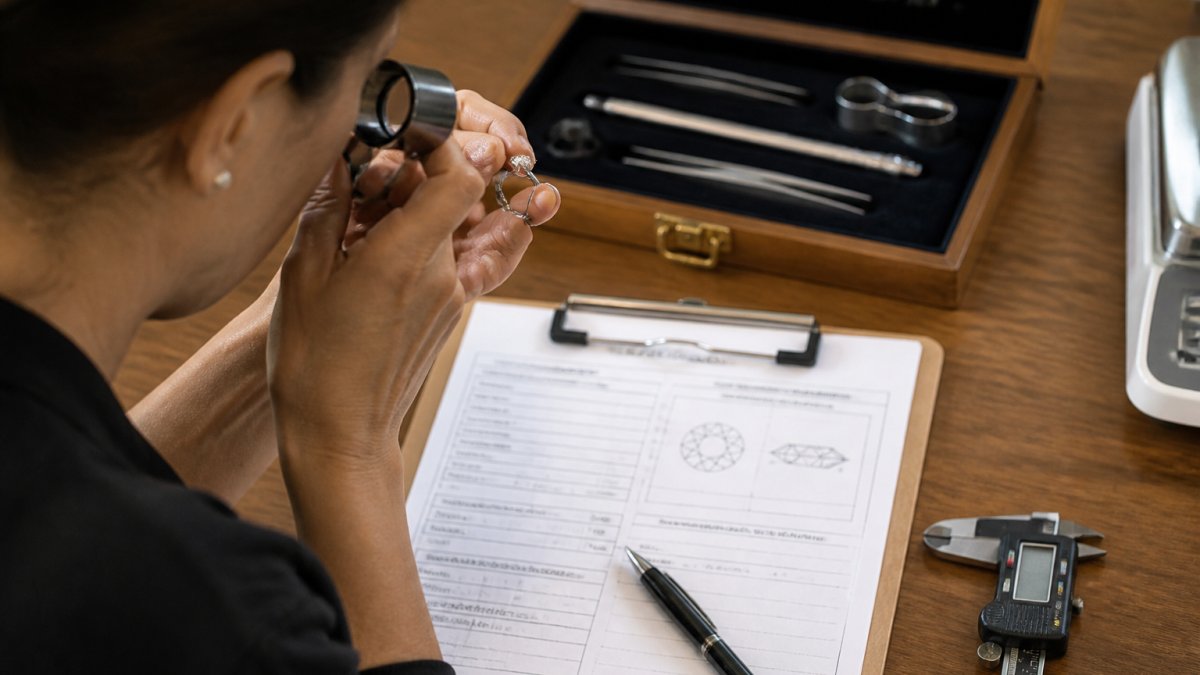
A typical appraisal begins with header information: appraiser name and credentials, appraisal date, and client name.
The item description section identifies the piece: "14K white gold solitaire engagement ring with round brilliant diamond." Measurements follow in millimeters.
The metal section documents: "14K white gold setting, total weight 3.2 grams. Hallmark verified as 14K.
The diamond section includes the Four Cs. An example might read: "Round brilliant diamond, approximately 1.05 carats, H color, VS1 clarity, excellent cut.
The setting section notes: "Six-prong platinum head, white gold band. Prongs are secure. Diamond is held firmly. No loose stones or damage."
The final valuation section states the appraiser's opinion: "Estimated replacement value: $5,100 (diamond $4,200 + setting $900).
The appraiser signs and dates the report.
Jewelry Appraisal Update Frequency and Report Maintenance
An appraisal is not permanent. Market conditions change, metal prices fluctuate, and your piece may experience wear or damage. Knowing when to update your appraisal helps you maintain accurate insurance coverage.
Most insurance companies recommend updating appraisals every three to five years. This is especially important for high-value pieces.
For inherited jewelry or pieces you rarely wear, an appraisal remains valid longer. A diamond's characteristics don't change over time. However, if you've had the piece cleaned, polished, or repaired, an updated appraisal documents the improved condition.
Keep your appraisal report in a safe place, a safe deposit box, home safe, or digital copy stored securely. If your jewelry is damaged or lost, you'll need this document to file an insurance claim.
If you have significant jewelry work done, a stone replaced, the setting redesigned, or the piece restored, consider getting an updated appraisal.
Appraiser Qualifications, Independence, and Valuation Types
Not every jeweler is qualified to provide a professional appraisal. Understanding appraiser credentials helps you trust the valuation you receive.
A qualified appraiser typically holds membership in the American Society of Appraisers (ASA) or has credentials from the Gemological Institute of America (GIA). These organizations require ongoing education, adherence to ethical standards, and demonstrated expertise.
Independence is crucial. The appraiser should have no financial interest in buying, selling, or insuring the piece.
Appraisals serve different purposes, and the valuation may differ based on that purpose. An insurance appraisal estimates replacement value, what it would cost to replace the piece with a similar new item today.
Always confirm the purpose of your appraisal with the appraiser before they begin work. This ensures the valuation serves your actual need.
A professional jewelry appraisal report is more than a number on a page. It's a detailed record of your piece's composition, quality, condition, and value.
When you need a professional appraisal, work with a qualified, independent appraiser who takes the time to examine your piece carefully and document every detail. Our appraisals are detailed, thorough, and designed to give you the documentation you need for insurance, estate planning, or simply knowing the true value of what you own. Book an appointment to have your jewelry professionally appraised by our experienced team.
Frequently Asked Questions
What details should a jewelry appraisal report include?
A complete jewelry appraisal report includes item description with photographs, metal type and purity, gemstone identification and quality (carat weight, cut, color, clarity for diamonds), measurements, condition, craftsmanship assessment, any treatments or enhancements, appraiser credentials, valuation purpose, replacement value estimate, date, and appraiser signature. The report should also note scope, assumptions, and any limitations affecting the valuation.
How often should you update a jewelry appraisal?
Jewelry appraisals should be updated every 3-5 years, or sooner if the piece is repaired, resized, or altered. Market values for precious metals and gemstones fluctuate, and insurance coverage should reflect current replacement costs. If you file a claim or make significant changes to the piece, request a new appraisal to ensure your insurance documentation is accurate and current.
What is the difference between an appraisal and a grading report?
An appraisal is a professional valuation opinion that estimates replacement value for insurance or resale purposes. A grading report (like those from GIA or IGI) is a laboratory certification of a gemstone's characteristics (carat weight, color, clarity, cut) but does not assign a monetary value. Many appraisals include or reference grading reports, but they serve different purposes: grading documents quality, appraisals document value.
Does a jewelry appraisal report identify gemstones and metals?
Yes. A professional jewelry appraisal identifies metal type and purity (14K gold, platinum, sterling silver, etc.), and identifies gemstones by type (diamond, sapphire, emerald) and origin (natural, lab-created, treated). The appraiser documents carat weight, cut, color, clarity, and any enhancements or treatments. This detailed identification is essential for insurance claims and resale authentication.
What is a red flag on an appraisal?
Red flags include vague descriptions, missing photographs, no appraiser credentials or signature, inflated values not supported by market data, failure to disclose treatments or enhancements, and lack of clarity on valuation purpose. A reputable appraisal should be detailed, transparent about limitations, and prepared by a qualified, independent appraiser with no financial interest in the piece's sale.
What does an appraisal report say about a jewelry item's value?
The appraisal report states a replacement value estimate, which is the estimated cost to replace the piece with one of similar quality, materials, and craftsmanship at current market prices. This value is used for insurance coverage and is based on the appraiser's assessment of the gemstones, metals, condition, and craftsmanship. The report should clearly note the valuation date and purpose.