

Last Updated: November 5, 2026
Quick Summary
To learn how to choose the perfect gemstone for a custom ring, start with durability: a stone worn daily should rate 7 or higher on the Mohs hardness scale. Then balance cut, clarity, size and budget, and inspect the loose stone under 10x magnification before it is set.
- Diamonds rate 10 on the Mohs scale, while sapphire and ruby land at 9.
- Softer stones like emerald and opal can work in protective bezel settings.
- Lab-grown and natural gemstones share identical optical and physical properties.
- Set a minimum quality floor first, then spend upward on size.
- Inspect the girdle, table and pavilion under 10x magnification in daylight.
Table of Contents
- Start With How the Ring Will Be Worn
- Durable Gemstones for Engagement Rings: Reading the Mohs Scale
- Lab-Grown vs Natural Gemstones: What Changes and What Doesn't
- A Gemstone Cut and Clarity Guide for Custom Settings
- Balancing Gemstone Size and Quality Within Your Budget
- Inspecting a Gemstone Before It Is Set
- Book a Custom Ring Consultation at Eklektic in Houston
- Frequently Asked Questions
Start With How the Ring Will Be Worn
Knowing how to choose the perfect gemstone for a custom ring begins with one unglamorous question: what will this ring survive? A stone that lives in a jewelry box and appears at anniversaries faces a different life than one worn through hospital shifts, gym sessions, and dish duty.
The answer is durability, and durability has a number. According to Brilliant Earth's guidance on gemstone durability, a gemstone for daily wear should rate 7 or higher on the Mohs hardness scale to ensure longevity. That single threshold eliminates more options than most buyers expect.
So before you fall in love with a color, write down three things: hours worn per week, exposure to impact, and whether the ring will be cleaned with ultrasonic equipment. Those answers narrow the field faster than any photo gallery.
Durable Gemstones for Engagement Rings: Reading the Mohs Scale
The Mohs scale ranks minerals from 1 to 10 by resistance to scratching, and that ranking is the fastest filter you have. Diamonds sit at 10, the highest level of hardness for jewelry, per Anthony Joseph Jewelers' gemstone guidance. Sapphire and ruby land at 9. Quartz-family stones like amethyst sit at 7. Opal and pearl fall well below.
Hardness is not toughness, though. A stone can resist scratches and still chip if it has cleavage or thin edges. That distinction matters more than the headline number, and it is where most online guides stop short.
For a wider menu of stones that clear the daily-wear bar, our team keeps a running list in 7 Best Gemstones for Everyday Engagement Rings, which pairs each option with the setting style that protects it best.
When a Softer Stone Still Works
Softer stones are viable for daily wear when the setting does the protecting. CaratX's engagement ring trend report notes that emeralds and opals can work in custom rings when set in protective settings, such as a bezel that wraps the girdle in metal. A bezel trades some light return for real impact protection, and for a stone rated below 7.5 that is a fair trade.
Watch out: a prong-set opal on a ring worn daily is a repair bill waiting to happen. The stone is not the problem; the setting is.
| Stone | Mohs Rating | Daily Wear? | Best Setting |
|---|---|---|---|
| Diamond | 10 | Yes | Any |
| Sapphire / Ruby | 9 | Yes | Any |
| Amethyst | 7 | With care | Bezel or low profile |
| Emerald | 7.5-8 | With care | Bezel, halo |
| Opal | 5.5-6.5 | Occasional | Full bezel |
Lab-Grown vs Natural Gemstones: What Changes and What Doesn't
Lab-grown and natural gemstones share identical optical and physical properties; the difference is origin, supply, and price behavior over time. A lab-grown sapphire is the same corundum as a mined one, which is why it wears the same and rates the same on the Mohs scale. What changes is scarcity, and scarcity is what drives resale and estate value.
Our honest read: for a stone you plan to wear daily and never sell, lab-grown is the smarter spend because it puts more of your budget into size and cut quality. For an heirloom you intend to pass down, natural keeps a clearer story and a more predictable market. Lab Grown vs Natural Diamond Investment Value digs into how that trade-off plays out over decades.
A Gemstone Cut and Clarity Guide for Custom Settings
Cut decides how much light a stone returns, and clarity decides how much your eye notices what it should not. A well-cut stone with modest clarity reads brighter than a flawless stone cut too deep. This is the gemstone cut and clarity guide we walk every client through before a stone is sourced.
Emerald Cut Lab Grown Blue Sapphire - 4.30ct →
Clarity grading looks at inclusions under magnification, and the grade you can accept depends on the stone. Sapphires and rubies are routinely accepted with visible inclusions because the market expects them. Diamonds reward a higher bar.
- Cut: prioritize proportions over carat weight; a shallow or deep pavilion leaks light
- Clarity: VS or better for diamonds; eye-clean is the practical target for colored stones
- Color: for sapphire, expect natural zoning; for emerald, expect jardin
- Shape: confirm the cut suits the setting, since step cuts show inclusions more than brilliants
Balancing Gemstone Size and Quality Within Your Budget
Size and grade of the center stone are among the largest pricing variables in custom jewelry, according to Washington Diamond's custom jewelry pricing guide. That gives you two levers, and pulling the wrong one is expensive.
Our rule: set a minimum quality floor first, then spend upward on size. A slightly smaller stone with a better cut and cleaner color beats a larger stone with a visible window. If you are weighing a colored stone, our catalog shows the spread clearly: a 4.30ct emerald-cut lab-grown blue sapphire at $1,854.00 sits in a very different bracket than a 2.57ct oval Colombian emerald at $3,800.00, and that gap is about origin and rarity, not size.


For a full cost breakdown before you commit, Custom Engagement Ring Cost: What to Expect in 2026 lays out the line items.
Inspecting a Gemstone Before It Is Set
Inspect any gemstone under 10x magnification in daylight, checking the girdle for chips, the table for scratches, and the pavilion for a window that lets light fall straight through. Do this before the stone goes to a setter, because after setting your options narrow sharply.
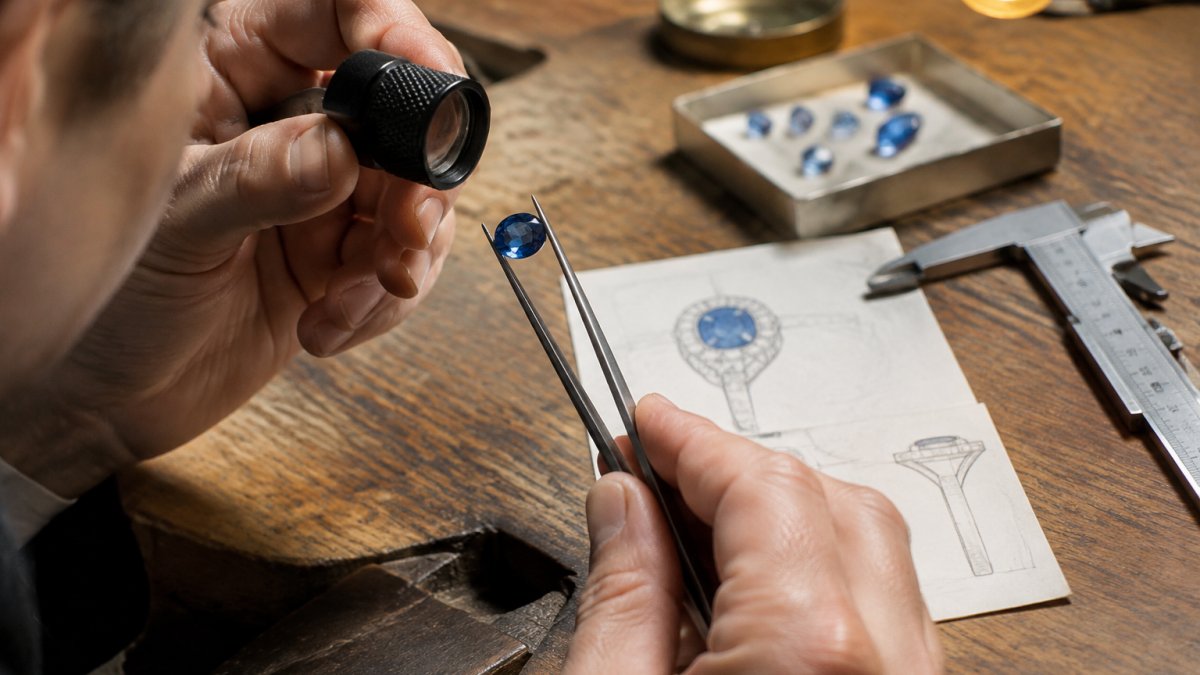
Ask for the stone loose, not already mounted, and rotate it through several angles. Tilt it face-down against white paper to check color saturation honestly. If you want a repeatable method for checking clarity yourself, How to Check Diamond Clarity at Home: A Step-by-Step Guide walks through it.
Book a Custom Ring Consultation at Eklektic in Houston
The last step is the one that saves the most money: bring your shortlist to a studio that sets stones in-house and can tell you honestly which ones will survive daily wear. Eklektic is a full-service fine jewelry studio in Houston, where design, CAD, casting, stone setting, and finishing happen in the studio. Three generations of custom jewelry making experience stand behind the bench.
If you are ready to choose a stone with a jeweler looking over your shoulder, what to look for in custom jewelry engagement rings is worth reading before you walk in. For a custom ring consultation in Houston, book an appointment and bring your questions, your budget, and any inherited stones you want reworked.
Frequently Asked Questions
What is the most durable gemstone for an everyday custom ring?
Diamond sits at 10 on the Mohs hardness scale, the highest rating for jewelry. Sapphire, ruby, and spinel rate 7.5 or higher. A minimum of 7 is generally recommended for stones worn regularly. Anything below that, including opal, pearl, and tanzanite, scratches more easily and needs a protective setting or occasional wear. If the ring will be worn every day, pick a stone at 7.5 or above and save softer gems for pieces worn less often.
Are lab-grown gemstones a good choice for custom engagement rings?
Lab-grown stones share the same crystal structure and hardness as their natural counterparts, so the durability guidance does not change. The choice comes down to budget and preference. A lab-grown blue sapphire in an emerald cut gives you the look of a classic stone at a lower cost, while a natural Colombian emerald carries provenance that some buyers value. The size and grade of the center stone are among the largest pricing variables in custom work, so comparing both options early keeps the design flexible.
How do I balance gemstone size and quality within my budget?
The size and grade of the central gemstone are among the largest pricing variables for custom jewelry. A slightly smaller stone with better cut and clarity usually looks livelier than a larger, included one. Decide which matters more for the design, then put the money there. For a bezel or halo setting, a well-cut 8mm stone can read as larger than its carat weight suggests. Bring your budget to the first consultation so the studio can show realistic options.
What should I look for when inspecting a gemstone for a custom setting?
Ask to see the stone loose and under magnification. Check the cut first: even facets and good light return matter more than carat weight. Look for visible inclusions or chips near the girdle, since that edge takes the most stress in a setting. Confirm the stone's measurements in millimeters, not just carats, so it fits the design. Softer stones like emeralds and opals can work in custom rings when set protectively, so ask how the setting will shield the stone.
Choosing a gemstone is a durability decision first and an aesthetic one second, and the buyers who get it right are the ones who ask what the ring will live through before they ask what it will look like. Eklektic handles custom design, stone sourcing, setting, and restoration in one studio, so the stone you pick is the stone we set, finish, and care for afterward. Get started with Eklektic and choose a gemstone built for the life you will actually give it.
