

Table of Contents
- How Custom Engagement Rings Are Built: The Design Process
- Custom Engagement Ring Settings: Which Style Survives Daily Wear
- Choosing the Center Stone: Cut, Shape, and Lab-Grown Options
- Custom Engagement Ring Ideas: Turning a Vague Vision Into a Design
- Custom Engagement Ring Timeline: What Each Stage Costs You in Weeks
- Questions to Ask a Custom Jeweler Before You Commit
- Conclusion: The Details That Decide Whether You'll Love It in Ten Years
- Frequently Asked Questions
Last Updated: October 6, 2026
How Custom Engagement Rings Are Built: The Design Process
Knowing what to look for in custom jewelry engagement rings starts with understanding how they get made. Custom engagement ring design is the process of building a ring around your stone, your style, and your budget rather than picking one from a case. At Eklektic, the work happens in stages: a conversation about what you want, hand sketches, a CAD model you approve, casting, stone setting, and finishing.
Most first-time buyers assume the design phase eats the calendar. It doesn't. The stone hunt and the approval rounds do.
Here's the sequence we walk clients through:
- Consultation and inspiration gathering
- Hand sketches and concept direction
- CAD rendering for your review
- Casting in your chosen metal
- Stone setting and finishing
- Final inspection and appraisal
Each stage exists to catch problems early, when changes are cheap. A ring that looks wrong in a sketch costs nothing to redraw. The same ring cast in platinum costs real money to redo.
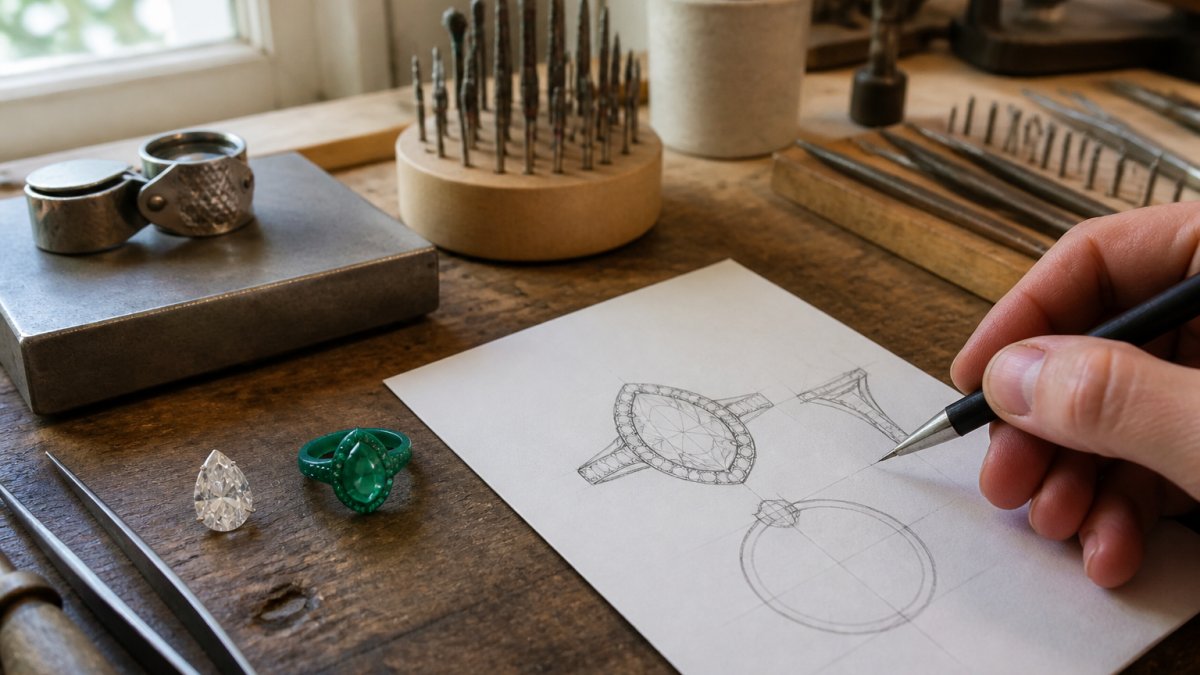
Custom Engagement Ring Settings: Which Style Survives Daily Wear
The setting matters more than most buyers expect. Custom engagement ring settings determine how protected the stone is, how high the ring sits, and whether it snags on everything you own.
Four styles cover most of what people ask for:
- Prong settings hold the stone with metal claws. Maximum light, minimum protection.
- Bezel settings wrap a metal rim around the stone's edge. The most secure option for daily wear.
- Halo settings ring the center stone with smaller stones. More sparkle, more places for dirt to hide.
- Channel settings recess stones between metal walls, common in wedding bands.
If the ring will be worn every day, a bezel or a low-profile prong setting is the safer call. High-profile settings look dramatic in photos and miserable in real life.
Choosing the Center Stone: Cut, Shape, and Lab-Grown Options
Cut is the single biggest factor in how a diamond looks. A well-cut stone with modest color and clarity outshines a poorly cut stone with better grades every time.
Shape comes next, and it's personal. Round brilliants remain the most popular. Pear, marquise, Asscher, and cushion cuts read as more distinctive, and each one changes how the ring looks on a hand.
Lab-grown diamonds have changed the math here. They're chemically and optically identical to mined diamonds, and they carry independent grading reports. For buyers who want a larger stone at a given budget, lab-grown is the practical route.
Loose Stones to Start From
Starting with a loose stone gives you control over the four Cs before any metal is involved. Our studio lists graded options with reports attached, including [a LG Diamond - 2.12ct Pear with an IGI report](/products/lg-diamond-2-12ct-pear), a LG Diamond - 2.10ct Round, and a LG Diamond - 4.09ct Marquise for buyers who want a dramatic elongated shape.


Custom Engagement Ring Ideas: Turning a Vague Vision Into a Design
You don't need a clear vision to start. Most clients arrive with a photo, a piece of inherited jewelry, or nothing but a feeling. That's enough.
The trick is to separate what you love from what you think you should want. Bring three references, not thirty. Tell your designer which specific detail drew you to each one: the milgrain edge, the split shank, the way the band tapers.
Some directions that work well as starting points:
- A redesign using stones from a family piece
- A modern bezel set in platinum
- A vintage-inspired halo with an old European cut
- A two-tone band in gold and platinum
If you're unsure, say so out loud. Designers work with vague briefs constantly, and a good one will ask questions until the shape of the idea appears.
Custom Engagement Ring Timeline: What Each Stage Costs You in Weeks
| Stage | Typical Duration | What Happens |
|---|---|---|
| Consultation and sketches | 1 week | Ideas, references, direction |
| CAD design and approval | 1-2 weeks | Renderings, revisions, sign-off |
| Stone sourcing | 1-3 weeks | Loose stone selection and grading |
| Casting | 1 week | Metal poured and cleaned up |
| Setting and finishing | 1 week | Stone set, polished, inspected |
Add a buffer if you're working toward a proposal date. Rush timelines exist, but they cost more and leave less room for revisions.
Questions to Ask a Custom Jeweler Before You Commit
Ask these before you pay a deposit. The answers tell you more than any showroom does.
- Who actually makes the ring, and where?
- Can I see the CAD model before casting?
- What happens if I don't like the finished piece?
- Are the stones certified, and by whom?
- What's the warranty on the setting and the stone?
- Do you handle resizing and repairs in-house?
- Can I see examples of past custom work?
That last question matters most. A studio that designs, casts, and sets under one roof can answer for every stage of the work. Eklektic handles design, CAD, casting, stone setting, and finishing in our studio, which means fewer handoffs and one point of accountability if something needs adjusting.
Conclusion: The Details That Decide Whether You'll Love It in Ten Years
The ring you'll still love in a decade is the one built around a stone you chose and a setting that survives real life. Style trends fade; a well-cut stone in a secure setting doesn't. If you're ready to start, Eklektic offers custom design, in-studio casting and stone setting, and a three-day review period for online purchases. Book an appointment with Eklektic and design a ring you'll still be glad you chose in ten years.
Frequently Asked Questions
What should I ask a jeweler before designing a custom engagement ring?
Ask where the work happens: is the ring cast, set, and finished in their own studio or sent out? Ask to see sketches or CAD renders before any metal is cut, and get the approval steps in writing. Confirm who handles the stone if it chips during setting, what the deposit covers, and what happens if you want changes after you see the finished piece. A studio that does the fabrication itself can answer all of this directly.
How long does it take to make a custom engagement ring?
Plan for several weeks rather than days. Building in a cushion before a proposal date matters, because rushing the setting stage is where mistakes happen. Ask your jeweler for a stage-by-stage schedule at the first meeting.
Can I use a family heirloom stone in a custom engagement ring?
Yes, and it is one of the most common reasons people go custom. A jeweler can unset an inherited diamond or gemstone, inspect it for chips or wear, and reset it in a new mounting built around its exact measurements. Ask for the stone to be measured and documented before work begins, and confirm whether the original setting will be returned to you. This is also a way to keep a family stone in use instead of stored in a drawer.
Which engagement ring setting is best for everyday wear?
Bezel and low-profile cathedral settings hold up best for people who work with their hands, because the metal wraps the stone edge and sits close to the finger. High-set prong settings show more of the stone but catch on clothing and surfaces. If you want a prong setting, ask for thicker prongs and a gallery rail underneath. The right answer depends on her daily routine, so describe it honestly to your jeweler.
Is it cheaper to design your own engagement ring?
It depends on the stone and the metal, not the word 'custom.' A simple custom solitaire in 14k gold with a modest lab-grown stone can land in the low thousands, while a large natural diamond drives the price regardless of who sets it. Custom work adds design and fabrication labor, but you skip retail markup on a finished piece. Ask for the quote broken into stone, metal, and labor so you can see where the money goes.
How do I choose a center stone for a custom engagement ring?
Start with shape, then size, then quality. A pear, round, marquise, Asscher, or rectangular cushion each reads differently on the hand, and shape affects how large the stone appears for its carat weight. Lab-grown stones with an IGI report give you documented color and clarity grades at a lower price than mined equivalents of the same size. Look at two or three loose stones in person or on video before deciding.