

Last Updated: October 26, 2026
Quick Summary
To replace missing earring stone, first examine the setting to check if prongs are bent or cracked, then obtain a matching replacement stone in the correct size and cut. For prong settings, straighten any bent prongs and carefully close them over the new stone, while glued settings require applying jewelry epoxy and allowing 24 hours for curing.
- Measure the original stone's diameter in millimeters and match its type, cut, color, and clarity for an accurate replacement.
- Essential tools include fine-pointed tweezers, a magnifying glass, a small needle or prong pusher, and jewelry epoxy for glued settings.
- DIY prong replacement takes 15 to 45 minutes, while glued settings require 24 hours for epoxy to cure completely.
- Bring your earring to a professional if the setting is cracked, you're uncertain about the stone size, or the earring has sentimental value.
- Professional jewelers typically complete stone replacement within 1 to 3 business days, with actual work time taking 20 to 30 minutes.
Table of Contents
- What to Do If You Lose a Stone From an Earring
- Tools and Materials You'll Need to Replace a Missing Earring Stone
- How to Match a Replacement Gemstone
- Step-by-Step Process: Replacing the Stone
- Earring Prong Repair and Setting Considerations
- How Long Does Earring Stone Replacement Take?
- When to Bring Your Earring to a Professional
- Frequently Asked Questions
What to Do If You Lose a Stone From an Earring
Losing a stone from an earring can feel devastating, especially if the piece holds sentimental value. The good news: it's almost always fixable.
At Eklektic, we handle stone replacement regularly, from vintage heirlooms to modern designs. Most missing stones can be replaced without damaging the original setting. The process is straightforward when you know what to expect.
Start by examining the earring closely. Look at the setting to see if the prongs are bent, cracked, or simply loose. Check whether the stone fell out cleanly or if part of the setting came away with it. Take photos from multiple angles. This information helps you decide whether to attempt a DIY approach to replace missing earring stone or bring the earring to a professional jeweler.
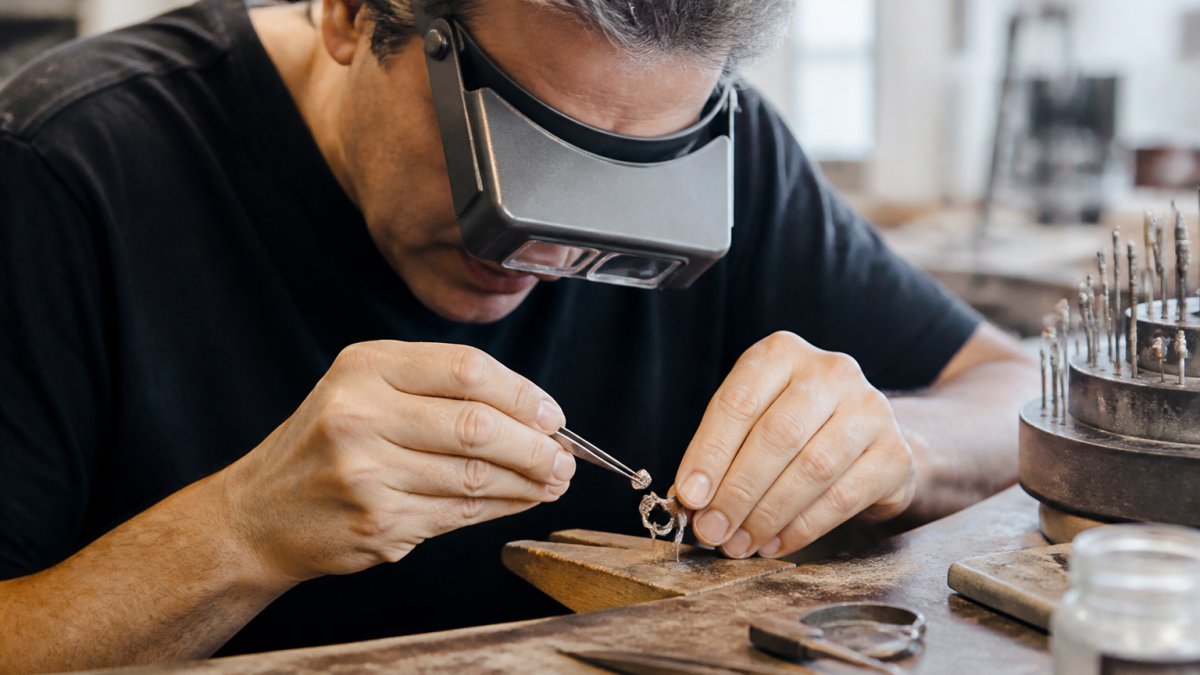
Tools and Materials You'll Need to Replace a Missing Earring Stone
Before you start, gather the right tools. Working with earring stones requires precision, and the wrong tool can damage the setting permanently.
Essential tools:
- Tweezers (fine-pointed, preferably jeweler's tweezers)
- Magnifying glass or jeweler's loupe
- Small needle or prong pusher
- Soft cloth or jewelry cloth
- Replacement gemstone (matching the original size and shape)
- Clear epoxy or jewelry adhesive (if needed for glued settings)
- Small dish or tray to catch tiny pieces
Optional but helpful:
- Jeweler's pliers (for bending prongs gently)
- Headlamp or bright desk lamp for better visibility
- Protective mat to prevent stones from rolling away
The most important tool is patience. Rushing this process leads to mistakes. Work in a clean, well-lit space. Set up a small workspace where you won't lose small pieces if they fall.
If your earring uses a prong setting, you'll need to understand how prongs work. Prongs are the metal "fingers" that hold the stone in place (gia.edu). They grip the stone from the sides or top. When a prong bends or loosens, the stone can fall out. If your setting uses adhesive instead of prongs, you'll need jewelry epoxy rather than mechanical tools.
How to Match a Replacement Gemstone
Finding the right replacement stone is critical. A stone that's too small will fall through the setting.
Measure the original stone's size. If you still have the stone that fell out, use a ruler or calipers to measure its diameter. Write down the measurement in millimeters.
Match the stone type. Was the original stone a diamond, sapphire, cubic zirconia, or something else? The material matters because different stones have different hardness levels and optical properties.
Consider the cut. Stones come in many cuts: round, oval, cushion, emerald, marquise, and more. The setting is designed for a specific cut. A round stone won't fit a cushion-shaped setting properly.
Check the color and clarity. If you're replacing a clear diamond, don't substitute a yellow stone. If the original stone had visible inclusions, a flawless replacement will look noticeably different.
Many jewelers in Houston can help you source a replacement stone. If you have the original stone, bring it along so they can match it exactly.
Online retailers also sell replacement stones in standard sizes and cuts. Measure carefully before ordering. Returning an incorrect stone wastes time.
Step-by-Step Process: Replacing the Stone
The process depends on whether your setting uses prongs or adhesive. Most earrings use prongs, so we'll cover that method first.
For prong settings:
-
Examine the prongs closely. Use your magnifying glass to see if they're bent, cracked, or intact. Bent prongs need to be straightened gently before the new stone can be seated.
-
Clean the setting. Use a soft cloth to remove any dirt, dust, or debris inside the setting. A clean setting helps the stone sit properly.
-
Straighten bent prongs carefully. If prongs are bent outward, use jeweler's pliers to bend them back inward. Apply gentle, steady pressure. Don't squeeze hard, you can crack the metal or the prongs.
-
Position the replacement stone. Use tweezers to hold the stone. Lower it slowly into the setting. Make sure it sits evenly. The stone should not tilt or rock.
-
Close the prongs over the stone. Starting with one prong, gently press it down over the stone's edge. Move to the opposite prong next, then the remaining prongs. This distributes pressure evenly. Work slowly and check frequently that the stone remains centered.
-
Test the hold. Gently tug on the stone with tweezers. It should not move. If it does, the prongs aren't tight enough. Repeat step 5, applying slightly more pressure.
For glued settings:
-
Remove any old adhesive. If the setting still has old epoxy or glue, scrape it out carefully using a small needle. Don't scratch the inside of the setting.
-
Clean the setting thoroughly. Use a soft cloth to remove all dust and debris.
-
Apply jewelry epoxy. Mix a small amount of two-part jewelry epoxy according to the package directions. Apply a tiny amount to the inside of the setting, just enough to coat the bottom.
-
Insert the stone. Use tweezers to place the stone into the setting. Press it gently but firmly into the epoxy.
-
Wipe away excess. Use a clean cloth to remove any epoxy that squeezed out around the edges.
-
Let it cure. Check the epoxy's cure time (usually 24 hours). Don't wear the earring until the adhesive has fully hardened.
Earring Prong Repair and Setting Considerations
Sometimes the setting itself needs attention before you can replace the stone. Damaged prongs, cracks in the metal, or worn settings can make stone replacement difficult or risky.
Common setting problems:
- Bent or misaligned prongs: These prevent the stone from sitting evenly. Straighten them gently before inserting the new stone.
- Cracked prongs: A cracked prong can break completely when you try to close it. If a prong is cracked, the setting may need professional repair.
- Loose or wobbly settings: If the setting itself moves or rocks, the stone won't stay secure. The mounting may need tightening or re-soldering.
- Worn metal: Very old earrings sometimes have worn settings where the metal has thinned from age. These settings may not hold a stone reliably.
If you notice any of these problems, consider bringing the earring to a professional. Attempting to force a stone into a damaged setting risks breaking it further.
The setting material also matters. Gold, platinum, and sterling silver all behave differently. Platinum is harder and less likely to bend, but it requires specialized tools. Gold is more forgiving but can wear faster. Sterling silver is affordable but softer than the other metals.
How Long Does Earring Stone Replacement Take?
The time required depends on the complexity of the repair and whether you're doing it yourself or using a professional.
DIY replacement: 15 to 45 minutes for a straightforward prong setting. This includes examining the earring, measuring the stone, positioning it, and closing the prongs. Glued settings take longer because you must wait for the epoxy to cure, which typically takes 24 hours.
Professional replacement: Most jewelers complete stone replacement within 1 to 3 business days. This includes sourcing a matching stone (if needed), preparing the setting, replacing the stone, and quality checks. Rush services may be available for an additional cost.
The actual work time is short, usually 20 to 30 minutes for a jeweler. The delay comes from scheduling, sourcing the stone, and allowing adhesive to cure properly.
If you're in Houston and need professional help, bring your earring in and ask for a time estimate. Many jewelers can give you a same-day quote and a completion date.
The time needed to replace a missing earring stone varies based on whether you handle it yourself or work with a professional.
| Approach | Time Required | What's Included |
|---|---|---|
| DIY prong setting | 15 to 45 minutes | Examine, measure, position, close prongs |
| DIY glued setting | 24 hours | Includes epoxy cure time |
| Professional jeweler | 1 to 3 business days | Source stone, prepare, replace, quality check |
| Professional actual work | 20 to 30 minutes | Hands-on replacement time only |
When to Bring Your Earring to a Professional
Some situations call for professional help. Knowing when to stop and seek expert assistance prevents costly mistakes.
Bring your earring to a professional if:
- The setting is cracked or severely bent
- You're uncertain about the stone size or type
- The original setting is damaged and needs repair before the stone can be replaced
- The earring is antique or has significant sentimental value
- You've attempted replacement and the stone won't stay secure
- The earring uses an unusual setting style you're unfamiliar with
- You lack the right tools or magnification to work safely
Find a reliable jewelry repair shop that can handle your earring stone replacement needs.
Professional jewelers have specialized tools, experience with many setting styles, and access to many replacement stones. They can also inspect the setting for hidden damage and recommend repairs you might miss.
At Eklektic in Houston, our team handles stone replacement as part of our comprehensive repair services. We work with your original setting to preserve the earring's design and integrity. Whether your earring is a family heirloom or a favorite modern piece, we take the time to match the stone correctly and ensure it's secure before you leave.
Frequently Asked Questions
Can a jeweler replace a missing stone in an earring?
Yes, a jeweler can replace a missing earring stone if the setting is intact. Jewelers assess the condition of the prongs or bezel and source a replacement stone that matches the original in size, color, and cut. The process involves removing any debris, preparing the setting, and securing the new stone. If the setting is damaged, the jeweler may need to repair or rebuild it first before setting the new stone.
How do you find a replacement stone for an earring?
To find a replacement stone, you'll need to identify the original gemstone's specifications: carat weight, cut, color, and clarity. Measure the stone's diameter or bring the earring to a jeweler who can determine the exact size. You can source replacement stones from gemstone suppliers, jewelry retailers, or have a jeweler source one for you. Matching the exact characteristics ensures the replacement looks identical to the original.
How long does it take to replace a stone in an earring?
The timeline for earring stone replacement depends on the setting condition and stone availability. A straightforward replacement with a stone already in hand typically takes 1-3 business days. If the setting needs repair or the stone must be sourced, the process may take 1-2 weeks. Complex repairs or custom stone matching may take longer. Always ask your jeweler for an estimated timeline when you drop off your earring.
What should I do if I lose a stone from my earring?
First, stop wearing the earring to prevent further damage or loss of the setting. Examine the setting for bent or damaged prongs. Keep the earring in a safe place and bring it to a jeweler as soon as possible. Don't attempt to glue the stone back in yourself, as adhesive can damage the gemstone and setting. A professional can properly assess the damage and restore your earring to its original condition.
A missing stone doesn't mean your earring is beyond repair. Whether you choose to replace it yourself or work with a professional, the process is straightforward when you have the right information. Take time to measure accurately, choose the right replacement stone, and work carefully. Your earring can look and function like new again.
