

Table of Contents
- Start With a Checklist Before You Hand Over Your Jewelry
- Jewelry Repair Questions to Ask Before You Commit
- Why On-Site Jewelry Repair Matters More Than You Think
- How to Read Jewelry Repair Shop Reviews Like a Skeptic
- What Jewelry Repair Turnaround Time Should You Expect?
- Red Flags That Signal You Should Walk Away
- Frequently Asked Questions
Last Updated: October 8, 2026
Start With a Checklist Before You Hand Over Your Jewelry
Finding a reliable jewelry repair shop starts with a short checklist, not a gut feeling. Ask about credentials, on-site work, insurance, and written estimates before you hand over anything you love.
That is why a little homework up front saves a lot of heartbreak later. Below, we walk through exactly what to check, what to ask, and what should make you walk out the door.
- Confirm the shop does repairs in-house, not through a third party
- Ask how many years the bench jeweler has worked on fine jewelry
- Request a written estimate before any work begins
- Ask whether the shop carries insurance for items in its care
- Check that the shop handles your specific metal and stone type
- Read recent reviews from the past six months
- Get a clear pickup date in writing
Credentials and Experience to Verify
A bench jeweler is the trained craftsperson who actually performs repairs at the workbench. That distinction matters, because many storefronts take in repairs and ship them elsewhere.
Look for a jeweler who works with the metals and stones you own. Gold, platinum, and sterling silver each behave differently under heat and pressure. A shop that mostly sells fashion jewelry may not have the tools for platinum, which needs higher heat and different solder.
Ask directly: who does the work, and how long have they done it? A confident, specific answer is a good sign. A vague one is not.
Jewelry Repair Questions to Ask Before You Commit
The right jewelry repair questions to ask will tell you more in five minutes than an hour of browsing. Here are the ones that matter most:
- What exactly will you do to the piece? You want specifics, not "we'll fix it."
- Will you use the original stones and metal? Replacements should be disclosed up front.
- Is the estimate final or an opening range? A firm quote protects you from surprise charges.
- What happens if a stone breaks during repair? Get the policy in writing.
- Do you guarantee the work? Ask how long the guarantee runs and what it covers.
- Can I see examples of similar repairs? Photos of past work build real confidence.
Write the answers down. A shop that hesitates on basic questions is a shop to skip.
Why On-Site Jewelry Repair Matters More Than You Think
On-site jewelry repair means the work happens in the shop you walked into, done by the jeweler you spoke with. That single detail changes almost everything about the outcome.
When a piece stays in one place, there is no shipping, no lost-item risk, and no middleman. You can ask questions during the process and see the piece before you pay. If a prong needs adjusting after a re-tip, the jeweler can handle it on the spot.
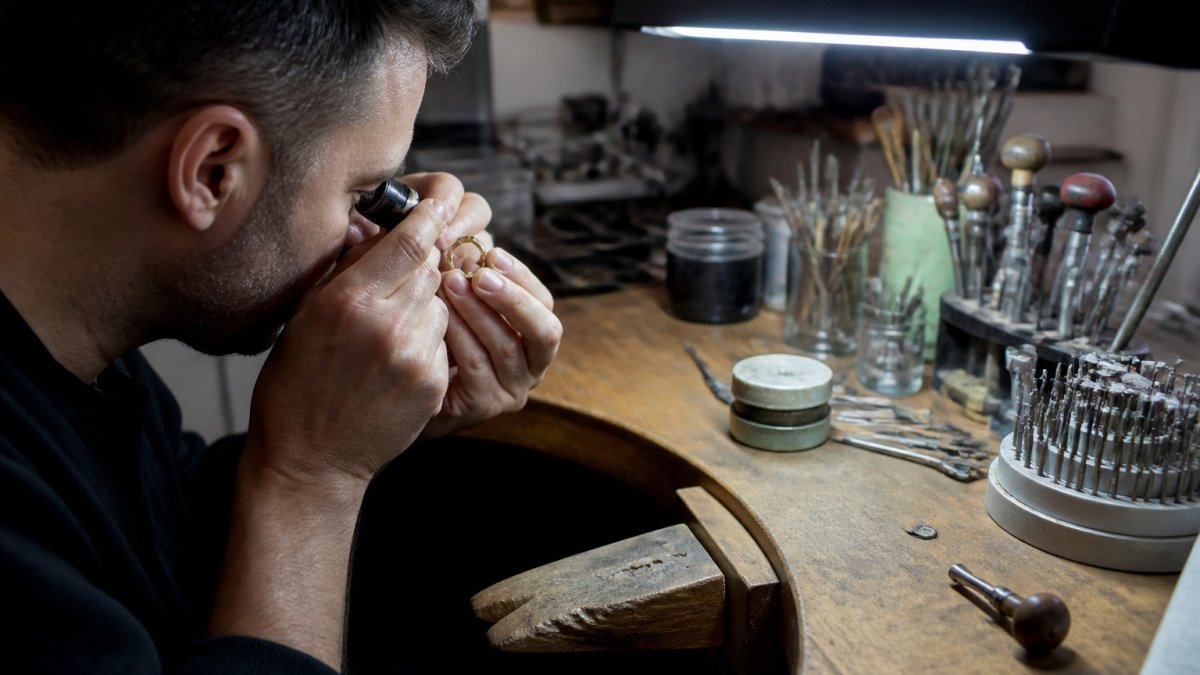
Off-site work adds a chain of hands. Each transfer is a chance for a mix-up.
At Eklektic, much of our repair and restoration work happens right in our studio. That includes laser welding, stone setting, and finishing, so a sentimental piece never leaves the building.
How to Read Jewelry Repair Shop Reviews Like a Skeptic
Jewelry repair shop reviews are useful, but only if you read them the right way. A wall of five-star ratings means little on its own.
Start with the three-star reviews. They tend to be the most honest, because the writer liked some things and not others. Look for patterns: late pickups, changed quotes, or stones that came loose after pickup.
Then check the dates. A shop with glowing reviews from four years ago and silence since may have changed hands or lost its bench jeweler.
- Ignore reviews that only mention price
- Trust reviews that describe a specific repair and outcome
- Watch for repeated complaints about the same problem
- Check whether the owner responds to negative reviews with specifics
One more thing: a shop that only has reviews about buying jewelry, not repairing it, may not be the right fit for your repair.
What Jewelry Repair Turnaround Time Should You Expect?
Jewelry repair turnaround time depends on the job. A simple chain solder or ring sizing can be done in a day or two. A full restoration, stone replacement, or custom rebuild can take several weeks.
Here is a rough guide:
| Repair Type | Typical Turnaround | Why It Varies |
|---|---|---|
| Chain or clasp solder | 1-3 days | Simple heat work |
| Ring sizing | 2-5 days | Metal match and finish time |
| Prong re-tip or rebuild | 3-7 days | Number of prongs, stone security |
| Stone replacement | 1-3 weeks | Sourcing the right stone |
| Full restoration | 3-6 weeks | Multiple steps, custom parts |
Ask for the timeline in writing. A shop that promises same-day service on a complex job is either rushing or outsourcing.
Red Flags That Signal You Should Walk Away
Some warning signs are obvious. Others hide behind a friendly counter and a nice display case. Watch for these:
- No written estimate. Verbal quotes leave you exposed to surprise charges.
- Pressure to decide on the spot. Good shops let you think it over.
- No receipt for your item. This is non-negotiable.
- Vague answers about who does the work. "It goes to our guy" is not an answer.
- No insurance or written policy. Ask what happens if the piece is lost or damaged.
- Unusually low quotes. A price far below everyone else often means cheap solder, glue, or rushed work.
- Reluctance to show past repair work. A confident shop has examples ready.
If two or more of these show up, leave. Your grandmother's ring is worth a second opinion.
Frequently Asked Questions
How do I know if a jewelry repair shop is trustworthy?
Look for a shop that provides a written work order, shows you the repair bench area, and has verifiable reviews mentioning specific repairs. Ask whether work is done on-site or sent elsewhere. A trustworthy jewelry repair shop will explain the process, give you a timeline, and document your piece's condition before you leave. Trust your instincts if anything feels evasive.
What should a jewelry repair receipt or work order include?
A proper work order should list your name and contact information, a detailed description of the piece including metal type and stone count, before-repair photos or notes, the specific repair requested, the estimated jewelry repair turnaround time, and the total cost. Get a copy before leaving. This document protects you if anything goes wrong or if the finished repair doesn't match what was agreed.
Should I get an appraisal before having jewelry repaired?
For high-value or inherited pieces, an appraisal before repair establishes documented value and condition. This matters if you file an insurance claim later or if a dispute arises about pre-existing damage. Ask the jewelry repair shop if they offer appraisal services or can recommend a qualified independent appraiser. Keep the appraisal with your work order for your records.
How long does jewelry repair usually take?
Basic repairs like ring sizing or clasp replacement often take a few days to a week. Complex work such as stone replacement, restoration, or custom fabrication can take several weeks. Jewelry repair turnaround time depends on the shop's workload, whether parts need ordering, and whether work is done on-site or outsourced. Always ask for a specific estimate in writing before leaving your piece.
Handing over a piece you love takes trust, and trust should be earned, not assumed. At Eklektic, every repair, restoration, and stone setting happens in our studio, so your jewelry never leaves our hands. We offer professional jewelry repair, stone replacement, and full restoration, backed by three generations of custom jewelry-making experience. Book an appointment with Eklektic and let us bring your piece back to life.