

Table of Contents
- Why Antique Fine Jewelry Deserves a Careful Restoration Plan
- Signs of Damage in Antique Jewelry: What to Look For First
- How to Clean Vintage Jewelry Safely at Home
- When to Choose Antique Jewelry Repair Services Over DIY Fixes
- The Best Way to Restore Antique Fine Jewelry: A Step-by-Step Process
- Insurance, Appraisal, and Documentation After Restoration
- Preserving Family Heirlooms for the Next Generation
- Conclusion: Restoring Antique Fine Jewelry With Confidence
- Frequently Asked Questions
Last Updated: October 4, 2026
Why Antique Fine Jewelry Deserves a Careful Restoration Plan
The best way to restore antique fine jewelry is a slow, staged process: assess the piece, stabilize the metal, then clean and rebuild only what is failing.
At Eklektic, we see it constantly: someone inherits a ring, scrubs it with a harsh cleaner, and eighty years of patina is gone in ten minutes.
Every piece of antique fine jewelry carries two kinds of value: the metal and stones, and the history held in its wear.
Signs of Damage in Antique Jewelry: What to Look For First
Damage in antique jewelry hides in two places: the structure holding the piece together, and the surface that tells you how it was made. Before you touch anything, look closely under good light with a loupe or zoomed phone camera.
Structural Warning Signs: Prongs, Settings, and Metal Fatigue
Prongs and settings fail slowly, then all at once. Check each one for these warning signs:
- Worn prongs that no longer grip the stone tightly
- Cracks at solder joints, especially where a band meets a head
- Metal fatigue near hinges, clasps, and thin shanks
If a stone moves at all, stop wearing the piece. A loose diamond can fall out and disappear in a parking lot.
Surface and Stone Clues: Patina, Oxidation, and Foil-Backed Stones
Surface clues show age, and some of that age is worth keeping. Patina is the mellow darkening that collects in the recesses of old gold and silver, adding contrast and depth. Oxidation turns silver and base metals black or green. Foil-backed stones are an older setting style where a thin metal foil sits behind a gem to brighten its color; that foil is fragile, and water, ammonia, or ultrasonic vibration can lift it, leaving the stone dull and flat.
How to Clean Vintage Jewelry Safely at Home
The safe way to clean vintage jewelry at home is a mild, non-toxic cleaner, a soft cloth, and patience. Skip anything that vibrates, soaks, or contains ammonia or alcohol.
For everyday cleaning, our Natural Cleaning Spray is built for exactly this job. It is safe for most metals, diamonds, and delicate gemstones including pearls, opals, and turquoise.

Material-Specific Chemical Reactions: What Each Cleaner Does to Each Stone
The wrong cleaner does not just dull a stone, it changes its chemistry.
Porous gems absorb liquid. Opal, pearl, turquoise, coral, and lapis have microscopic pores.
Ammonia strips patina. It is the active ingredient in most commercial dips.
Acids etch soft stones. Vinegar, lemon juice, and citric-acid "green" cleaners permanently etch marble, pearl, and some turquoise.
Alcohol dries and cracks organics. Pearl, amber, coral, and jet lose moisture and can craze.
What to Use, What to Avoid, and Why Ultrasonic Cleaners Are Risky
An ultrasonic cleaner uses high-frequency vibration to shake dirt loose. Fine for modern solid pieces; a gamble for antiques. The vibration can loosen old solder, crack brittle enamel, shake a fragile stone from its setting, lift foil backing, and drive moisture into porous gems.
Avoid these on any antique piece:
- Ammonia-based jewelry dips
- Toothpaste and baking soda, which are abrasive
- Chlorine and bleach, which attack gold alloys
- Paper towels, which scratch soft metal
A Quick Material-to-Method Reference
| Material | Safe Method | Never Use |
|---|---|---|
| Diamond, ruby, sapphire | Mild soap, soft brush, firm wipe | Chlorine, ultrasonic on antique settings |
| Opal, pearl, turquoise, coral | Barely damp soft cloth, air dry | Ammonia, alcohol, ultrasonic, soaking |
| Emerald | Dry soft cloth only | Ultrasonic, steam, acids |
| Foil-backed stones | Dry soft brush only | Water, ammonia, ultrasonic |
| Antique gold with patina | Mild cleaner, soft cloth, leave recesses | Ammonia dips, abrasive polish |
| Sterling silver | Silver cloth, gentle cleaner | Bleach, abrasive pads |
When in doubt, clean less and ask a jeweler before trying something new.
When to Choose Antique Jewelry Repair Services Over DIY Fixes
Antique jewelry repair services are the right call the moment a piece needs structural work, stone resetting, or metal rebuilding. Cleaning you can do at home. Rebuilding is a bench job.
Hand off the piece if you see any of these:
- A loose, missing, or chipped stone
- Cracked or bent metal, including a crushed shank
- Broken clasps, hinges, or safety chains
- Worn-through prongs that need retipping
Repairs require heat, pressure, and precision tools. A home fix with pliers or glue can crack a stone, strip a setting, or leave a repair that costs more to undo than to do right.
The Best Way to Restore Antique Fine Jewelry: A Step-by-Step Process
The best way to restore antique fine jewelry follows three stages: evaluate and document, repair the structure, then address stones and finish. Each stage protects the one after it. Timing varies by piece, from a same-week repair to a multi-week rebuild.
Step 1: Evaluate Condition and Document Provenance
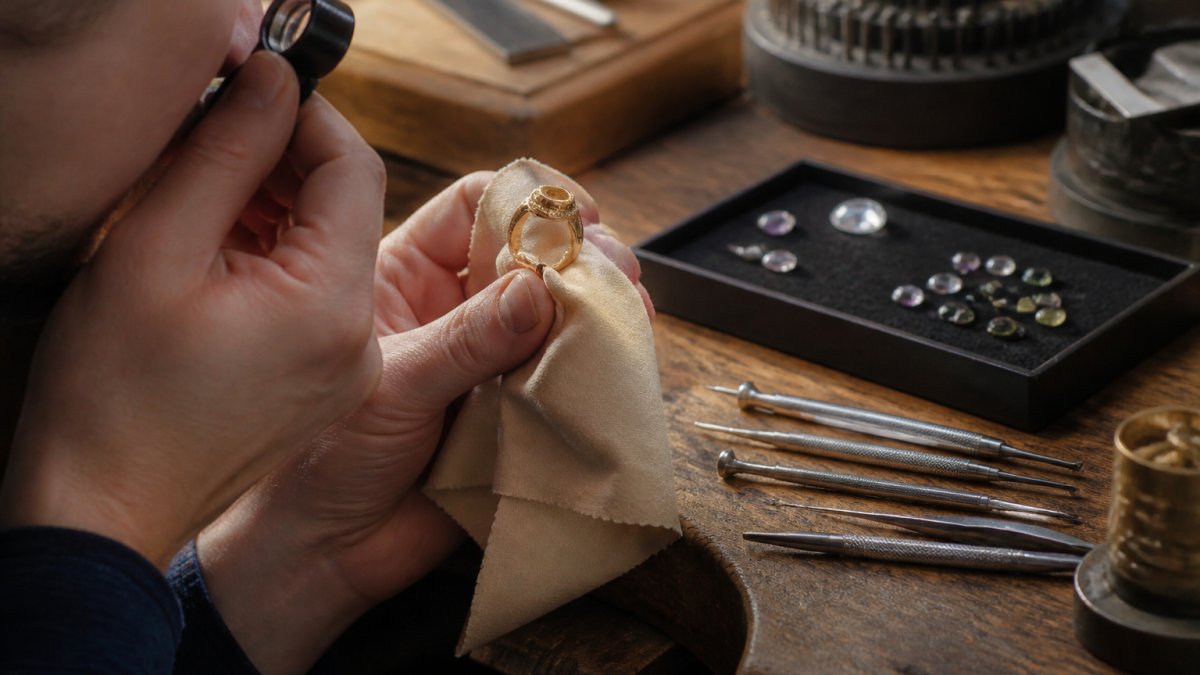
Assessment comes before any tool touches the piece: examine the metal, test stone stability, and photograph everything. Documentation and provenance matter here, and most guides skip it. Write down who owned the piece, when it was made, and any prior repairs, then photograph it from every angle before work starts. That record proves the piece's history for insurance and gives the bench a baseline to compare against.
Step 2: Repair, Rebuild, and Refurbish Structural Elements
Structural work comes next, because a loose stone cannot be cleaned safely. This stage covers:
- Retipping or rebuilding worn prongs
- Rebuilding a thin or cracked shank
- Replacing broken clasps and hinges
- Laser welding cracks without overheating the piece
The goal is to make the piece wearable again without erasing how it was made. We keep original solder joints where we can and match the metal alloy so repairs blend in.
Step 3: Recut, Replace, or Reset Gemstones and Preserve Patina
Stones get attention last. Gemstone recutting can restore a chipped or scratched stone, but it removes material, so it is a last resort; replacement is better when a stone is lost or too damaged to save. Then comes the finish: clean gently, leave patina in the recesses, and polish only where wear has made the metal rough.
Insurance, Appraisal, and Documentation After Restoration
A restored piece needs a fresh professional appraisal and updated insurance, the step owners forget, and it costs them later. Most policies require an appraisal reflecting current replacement value, which restoration may have changed. Get a written appraisal listing the metal, stones, and work performed.
How Restoration Changes Insurable Value
Restoration cuts two ways on value.
Replacement value usually goes up. A rebuilt shank, retipped prongs, or replaced stone makes the piece more wearable and may raise metal weight.
Collector value can go down. Antique and estate pieces carry a premium for original condition, and heavy polishing, replaced stones, and non-original solder joints can reduce it even when the piece looks better.
A good appraiser separates these two numbers. Ask for both replacement and market value, and ask which parts are original and which were restored.
What a Post-Restoration Appraisal Should Include
A written appraisal that holds up with an insurer should document:
- Metal type, karat, and tested weight
- Each stone: type, cut, carat weight, color, clarity, and whether it is original or replaced
- A description of the restoration work performed
- Which components are original to the piece
If the appraiser cannot tell what was restored, the appraisal is incomplete. Hand them your pre-restoration photos and repair summary before inspection.
Documenting Provenance to Protect Historical Integrity
Provenance is the paper trail of who owned a piece and when, the part of value restoration can quietly destroy if you do not record it. Before any work starts, write down who owned the piece and how it passed to you, any dates, inscriptions, or maker's marks, any prior repairs, and any family stories, even unverified.
If you are in the Houston area, our studio offers professional jewelry appraisals alongside restoration, so the paperwork and the work stay in one place. If you are not local, ask your restorer for a written summary you can hand to an appraiser.
Preserving Family Heirlooms for the Next Generation
Keeping a restored piece in good shape for decades comes down to storage and habits:
- Store pieces separately in soft pouches to prevent scratches
- Keep silver in tarnish-resistant cloth
- Put jewelry on last, after perfume and lotion
- Take pieces off before swimming, cleaning, or gardening
Restoring an heirloom also keeps metal and stones in use instead of mining new ones, ethical sourcing in practice, not marketing.
If you want a piece that carries this kind of history forward, our 14k yellow gold pendant set with an antique bronze coin shows how old material and new craftsmanship can sit in one piece. A companion design, the 18k yellow gold pendant with an antique bronze coin, follows the same idea.


Conclusion: Restoring Antique Fine Jewelry With Confidence
The hardest part of restoration is knowing when to stop: clean too little and the piece stays dull, clean too much and you erase the history that makes it valuable. That balance is what a real bench brings. Eklektic restores antique and inherited pieces in our studio, with in-house laser welding, stone setting, and appraisal, so one team handles the whole job.
Book an appointment with Eklektic and bring your heirloom back to a piece you can actually wear.
Frequently Asked Questions
Can antique jewelry be restored to its original condition?
Rarely in the strictest sense, and that is often a good thing. Antique fine jewelry carries patina, hand engraving, and fabrication details that give it character. A skilled restoration focuses on structural integrity, stone security, and safe cleaning while preserving that history. Expect a piece that looks cared for and wearable, not brand new. Ask your jeweler to explain what will change and what will stay before any work begins.
What is the safest way to clean antique jewelry at home?
Start with the gentlest method: a soft polishing cloth and a mild, ammonia-free cleaner like the Natural Cleaning Spray from Eklektic, which is safe for most metals, diamonds, and delicate gemstones including pearls, opals, and turquoise. Avoid ultrasonic cleaners, abrasive pastes, and harsh chemicals, especially on porous gems, foil-backed stones, or enamel. When in doubt about a fragile piece, leave cleaning to a professional.
How do you know if antique jewelry is worth restoring?
Consider three factors: sentimental value, material value, and structural condition. A piece with family history or genuine gold, platinum, and quality stones is usually worth restoring. Look for metal fatigue, loose prongs, worn settings, or missing stones, since these affect wearability. An in-person consultation with a jeweler who handles antique jewelry repair services will tell you what is realistic and what the piece can safely tolerate.
How often should antique jewelry be professionally inspected?
Once a year is a reasonable rhythm for pieces you wear often, and every six months for rings with high-set or fragile stones. Antique settings loosen over time from metal fatigue, and a quick inspection catches worn prongs before a stone is lost. Between visits, check for wobbling stones, catch points on fabric, or new cracks. A short annual appointment costs far less than rebuilding a damaged setting.