

Table of Contents
- Preparation and Inspection Before You Clean
- Method 1: Mild Dish Soap and Warm Water Solution
- Method 2: Baking Soda Paste for Tarnish Removal
- Method 3: Vinegar and Baking Soda Soak
- Method 4: Lemon Juice and Dish Soap for Stubborn Grime
- Method 5: Gentle Microfiber Cloth Polish Between Cleanings
- How to Clean Diamond Rings Without Damaging Settings
- How Often Should You Clean Your Engagement Ring
- Frequently Asked Questions
Last Updated: September 25, 2026
Preparation and Inspection Before You Clean
Before you clean your engagement ring at home, take time to examine clean engagement rings closely. Look for loose stones, damaged prongs, or cracks in the band. These issues need professional attention before any cleaning.
Check the setting carefully. Gently push on each stone to see if it moves. If a stone shifts or feels loose, stop and contact a jewelry professional. Cleaning a ring with a compromised setting can cause permanent damage.
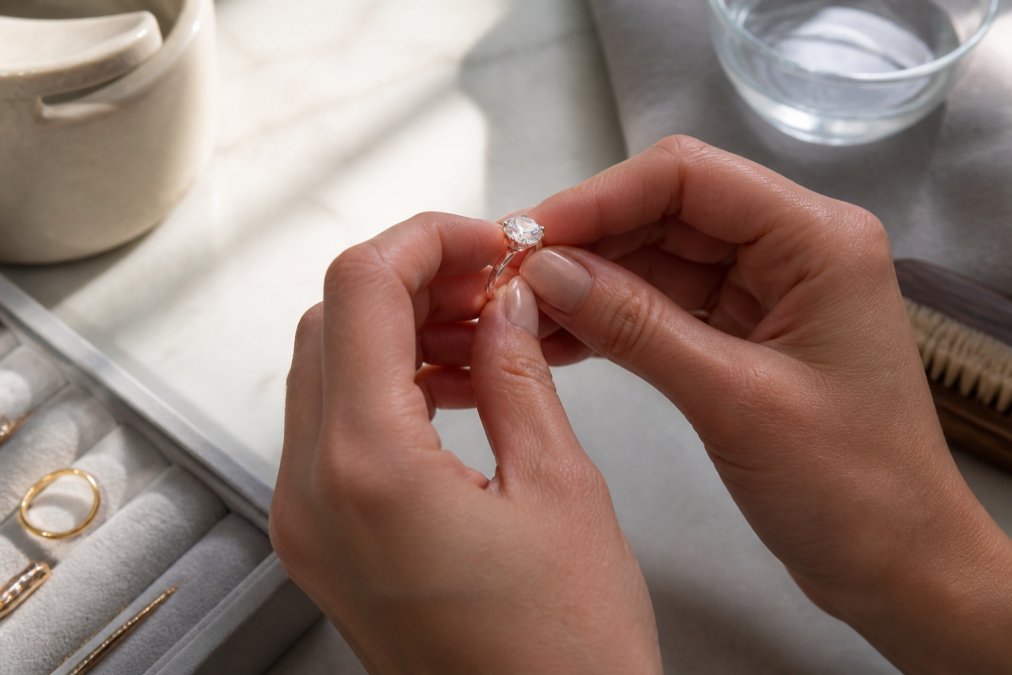
Inspect the metal for signs of wear. Look for thin spots, cracks, or areas where the metal looks fragile. If you see damage, professional restoration is safer than home cleaning.
Method 1: Mild Dish Soap and Warm Water Solution
Fill a small bowl with warm (not hot) water and add a few drops of mild dish soap. Hot water can damage some gemstones and weaken older settings.
Soak your ring for 15-20 minutes to soften buildup and break down oils and grime.
Use a soft-bristled toothbrush to gently scrub the underside of the stone and around the prongs with light pressure. Aggressive scrubbing can scratch metal or loosen stones.
Rinse thoroughly under warm water over a drain strainer until all soap residue is gone. Pat dry with a lint-free cloth and let air dry completely to prevent water spots and tarnishing.
Method 2: Baking Soda Paste for Tarnish Removal
When your ring loses shine or develops tarnish, baking soda paste restores luster, especially on sterling silver and white gold. Mix baking soda with water to create a toothpaste-like consistency.
Apply to tarnished areas and gently rub with a soft toothbrush or cloth in circular motions. Let sit for 5-10 minutes, longer contact can be too abrasive.
Rinse thoroughly under warm water, using your soft toothbrush to remove all paste residue from crevices. Dry completely with a lint-free cloth to prevent discoloration.
Method 3: Vinegar and Baking Soda Soak
Pour white vinegar into a small bowl to cover the ring and add a tablespoon of baking soda. The fizzing action helps dislodge dirt and oxidation.
Soak for 15-20 minutes, then gently scrub with a soft toothbrush. The fizzing action has already loosened most debris, so light brushing is sufficient.
Rinse under warm water until all vinegar smell is gone. Dry thoroughly with a lint-free cloth. Use monthly for rings showing tarnish.
Method 4: Lemon Juice and Dish Soap for Stubborn Grime
Mix fresh lemon juice (not bottled concentrate) with a few drops of mild dish soap for stubborn grime. Fresh juice is gentler on delicate settings.
Soak for 10-15 minutes, then gently clean with a soft toothbrush, focusing on the underside of the stone and spaces between prongs where dirt accumulates.
Rinse thoroughly under warm water until the water runs clear. Dry completely with a lint-free cloth to prevent metal damage from acidity.
Method 5: Gentle Microfiber Cloth Polish Between Cleanings
Between deeper cleaning sessions, a microfiber cloth keeps your engagement ring looking fresh and prevents the accumulation of oils and dust that dull its shine. This simple method removes fingerprints and light debris without water or chemicals, making it ideal for daily maintenance.
Use only jewelry-grade microfiber cloths, which have a tighter weave and finer fibers that lift oils without scratching. Regular microfiber, cotton, and paper towels can scratch metal and leave lint.
Daily Polish Technique
Gently wipe the entire ring with the cloth using light pressure and circular motions. Focus on the top of the stone and the visible parts of the band first. Then pay special attention to the underside where oils from skin accumulate. Even though you can't see it, cleaning underneath keeps the ring brighter longer and prevents buildup that becomes harder to remove over time.
Use short, controlled strokes rather than aggressive rubbing. The goal is to remove surface oils, not to deep-clean. This method takes just 30 seconds and can be done multiple times daily without risk of damage.
Storage and Maintenance of Your Cloth
Store the cloth in a small pouch, jewelry box, or clean drawer. Keep it clean and dry, a dirty cloth will redeposit grime instead of removing it. Wash your microfiber cloth monthly in cool water with a small amount of mild soap. Air dry completely before using again. Never use fabric softener or dryer sheets, as these leave coatings that reduce the cloth's effectiveness.
Integration Into Your Cleaning Schedule
For daily wearers, use the microfiber cloth every morning or evening as part of your routine. This prevents oil buildup and keeps the ring brilliant between weekly soap-and-water cleanings. For rings worn several times a week, a quick polish before wearing maintains appearance. For occasional-wear rings, polish with the microfiber cloth before putting the ring on.
This method is particularly valuable for white gold and platinum rings, which show fingerprints and oils more visibly than yellow gold. A quick daily polish keeps these metals looking lustrous without the need for frequent deep cleaning.
How to Clean Diamond Rings Without Damaging Settings
Diamond rings require special care because the stone is held in place by a delicate setting. Understanding how to protect the setting while cleaning the diamond is essential. Different setting types trap debris differently and respond differently to cleaning methods.
Prong Settings and Ultrasonic Cleaners
Prong settings are particularly vulnerable to ultrasonic cleaning machines. These devices vibrate at frequencies between 40,000 and 68,000 cycles per second, creating microscopic shock waves that can loosen prongs over time. The vibration can gradually work prongs away from the stone, even if they appear secure immediately after cleaning. For rings with prong settings, hand cleaning is always safer. If a jeweler recommends an ultrasonic cleaner, ask specifically whether your ring's prongs have been professionally checked and tightened first.
Bezel Settings and Steam Cleaners
Steam cleaners force pressurized hot water into tight spaces around stones. In bezel settings, where the metal wraps around the stone's edge, steam can penetrate the seal between metal and stone. This moisture can become trapped, causing oxidation, discoloration, or weakening of the adhesive used in some modern settings. Older bezel-set rings are especially at risk. Avoid steam cleaning entirely for bezel-set engagement rings.
Pavé Settings and Porous Stones
Pavé settings feature multiple small diamonds or accent stones set closely together across the band.
The Most Important Rule: Gentle Pressure
After-Cleaning Inspection
How Often Should You Clean Your Engagement Ring
How often you clean your engagement ring depends on how frequently you wear it and your lifestyle. Daily wearers need more frequent cleaning than occasional wearers.
Frequently Asked Questions
Can I use Dawn dish soap to clean my engagement ring?
Yes, mild dish soap like Dawn is one of the safest options for cleaning engagement rings at home. Mix a few drops with warm water to create a gentle solution. Soak your ring for 20-30 minutes, then use a soft-bristled toothbrush to gently scrub around the diamond and metal surfaces. Rinse thoroughly with clean water and air dry on a lint-free cloth. This method works well for routine maintenance and removes everyday grime buildup without harsh chemicals.
How often should you clean your engagement ring?
For daily-wear engagement rings, clean them every 1-2 weeks to maintain luster and prevent debris accumulation. If you wear your ring less frequently or notice visible dullness, clean it as needed. Rings exposed to lotions, soaps, or outdoor activities may need more frequent cleaning. Between deep cleanings, use a soft microfiber cloth to gently polish the surface. Professional inspection and cleaning every 6-12 months can help identify any setting issues and maintain the diamond's brilliance.
What household cleaners damage engagement rings?
Avoid bleach, ammonia-based cleaners, acetone, and harsh abrasive scrubbers, these can damage both the diamond and metal settings. Ultrasonic cleaners and steam cleaners pose risks for porous gemstones and can loosen prongs if settings are delicate. Avoid toothpaste, which is too abrasive for soft metals like gold. Never use rough brushes or cloth that shed fibers. Stick to mild dish soap, baking soda paste, or vinegar-based solutions for safe home cleaning.
How do I make my engagement ring sparkle again?
Start with a gentle soak in mild dish soap and warm water for 20-30 minutes to lift grime. Use a soft-bristled brush to gently scrub the diamond and band, paying attention to the underside where debris collects. Rinse thoroughly with clean water and dry immediately with a lint-free cloth to restore shine. For stubborn dullness caused by tarnish on metal, try a baking soda paste or vinegar soak. If your ring remains dull after home cleaning, professional polishing and inspection can address luster and check for loose prongs.