

Last Updated: October 25, 2026
Quick Summary
Gold jewelry tarnish occurs when alloy metals mixed into gold react with oxygen and moisture in the air. Pure gold doesn't tarnish easily, but most jewelry contains copper, silver, or other metals that oxidize over time, creating a dark film on the surface.
- 18K gold tarnishes slower than 14K gold because it contains 75% pure gold versus 58.3% pure gold
- Gold-plated jewelry tarnishes much faster than solid gold because the thin plating wears away within months of regular wear
- Sweat, humidity, chlorine, and perfumes all accelerate tarnishing by reacting with alloy metals in gold jewelry
- Storing jewelry in airtight containers with silica gel packets and removing pieces before exercise or swimming prevents tarnish
- Professional jewelers can safely remove stubborn tarnish from heirloom pieces without scratching the metal
Table of Contents
- Understanding Gold Jewelry Tarnish
- 14K vs. 18K Gold Tarnish: Which Holds Up Better?
- Gold-Plated Jewelry Tarnishing: Why It Happens Faster
- Environmental and Personal Factors That Speed Up Tarnishing
- How to Clean Tarnished Gold Jewelry Safely
- How to Prevent Gold Jewelry from Tarnishing
- Getting Professional Help for Tarnished Heirloom Pieces
- Frequently Asked Questions
Understanding Gold Jewelry Tarnish
Gold jewelry tarnish happens when the metal reacts with elements in the environment. Pure gold doesn't tarnish easily. But most jewelry contains gold alloys mixed with other metals. Those metals are what actually tarnish over time.
According to research from Tulane University's materials science department, "People have generally thought gold doesn't tarnish simply because it doesn't interact strongly with oxygen." The truth is more complex. Your gold ring tarnishes not because of the gold itself, but because of the copper, silver, or other metals mixed into it.
This matters because understanding why gold jewelry tarnish happens helps you protect your pieces. At Eklektic, we work with gold daily and see exactly how different alloys behave over months and years. The metal composition determines tarnish speed more than anything else.
Tarnish appears as a dark film or discoloration on the surface. It doesn't mean your jewelry is damaged. It means the alloy metals have oxidized. Oxidation is a chemical reaction with oxygen and moisture in the air.
14K vs. 18K Gold Tarnish: Which Holds Up Better?
The difference between 14K and 18K gold comes down to purity. 18K gold contains 75% pure gold. 14K gold contains 58.3% pure gold. The remaining percentage is filled with other metals.
Higher karat gold tarnishes slower because it has less alloy metal exposed to oxidize. 18K gold stays brighter longer than 14K. But 18K costs more and is softer, so it scratches easier during daily wear.
14K gold is the practical choice for engagement rings and everyday pieces. It resists tarnish reasonably well while staying durable enough for constant wearing. Many people choose it because the balance works for real life.
The metals mixed into lower-karat gold matter too. Copper tarnishes faster than palladium or silver. Some jewelers use copper to lower costs. Others use better alloy blends that resist tarnish longer.
At Eklektic, we help customers choose alloy blends based on their lifestyle.
| Gold Karat | Pure Gold % | Tarnish Speed | Durability | Best For |
|---|---|---|---|---|
| 24K | 100% | Very slow | Soft, scratches easily | Special occasion pieces |
| 18K | 75% | Slower | More durable | Frequent wear |
| 14K | 58.3% | Moderate | Very durable | Daily engagement rings |
| 10K | 41.7% | Faster | Most durable | Work jewelry |
Gold-Plated Jewelry Tarnishing: Why It Happens Faster
Gold-plated jewelry tarnishes much faster than solid gold. A thin layer of gold sits on top of a base metal like brass or copper. When that gold layer wears through, the base metal underneath oxidizes immediately.
The plating typically wears away within months of regular wear. Friction from skin contact, sweat, and daily activity all speed up the process. Once the base metal shows, tarnish appears almost instantly.
Gold plating serves a purpose. It lets people wear gold-colored jewelry affordably. But it's not meant for heirlooms or pieces you'll wear forever. The base metal will eventually show and tarnish.
Sweat contains acids and salts that accelerate tarnishing. People with active lifestyles see gold-plated jewelry tarnish faster. Humidity also speeds up the process. Houston's climate means higher moisture in the air, so tarnish happens quicker here than in drier regions.
To extend the life of gold-plated pieces, remove them before exercise or swimming. Store them in a dry place. Avoid lotions and perfumes that can damage the plating.
Environmental and Personal Factors That Speed Up Tarnishing
Several things in your daily environment make gold jewelry tarnish faster.
Humidity and moisture create the chemical reaction that causes tarnish. Coastal areas, bathrooms, and humid climates all speed it up. If you live in Houston, you're dealing with higher humidity than most places.
Sweat contains salt and acid. People who exercise frequently see tarnish develop faster. The salt in sweat reacts with alloy metals and accelerates oxidation.
Chlorine and sulfur in swimming pools and hot tubs damage gold jewelry. These chemicals strip away protective layers and cause rapid tarnishing. Remove your jewelry before getting in water.
Perfume, lotions, and cosmetics contain chemicals that react with gold alloys. These products sit on your skin and transfer to jewelry. Over time they cause discoloration and tarnish.
Air pollution in urban areas contains sulfur compounds. These compounds react with copper and silver in gold alloys. Cities have more tarnish problems than rural areas.
Body chemistry varies person to person. Some people's skin pH causes faster tarnishing. Others have skin that reacts with certain metals. This is why the same ring tarnishes faster on one person than another.
Storage conditions matter. Jewelry stored in humid environments tarnishes faster. Airtight boxes with silica gel packets slow the process. Dark, dry storage is ideal.
How to Clean Tarnished Gold Jewelry Safely
Gentle cleaning restores tarnished gold jewelry without damaging it. Start with the gentlest method first. Only move to stronger approaches if needed.
Soft cloth method: Use a microfiber cloth to gently rub the tarnish away. This works for light tarnish. It takes patience but causes no damage.
Mild soap and water: Mix warm water with a few drops of dish soap. Soak the jewelry for 5-10 minutes. Use a soft toothbrush to gently scrub. Rinse thoroughly and dry with a soft cloth.
Jewelry cleaning solution: Use a product specifically designed for gold. The Natural Cleaning Spray from Eklektic is safe for most metals, diamonds, and delicate gemstones. It's alcohol-free, ammonia-free, and made from plant-based ingredients. Spray it on, let it sit briefly, and wipe with a soft cloth.
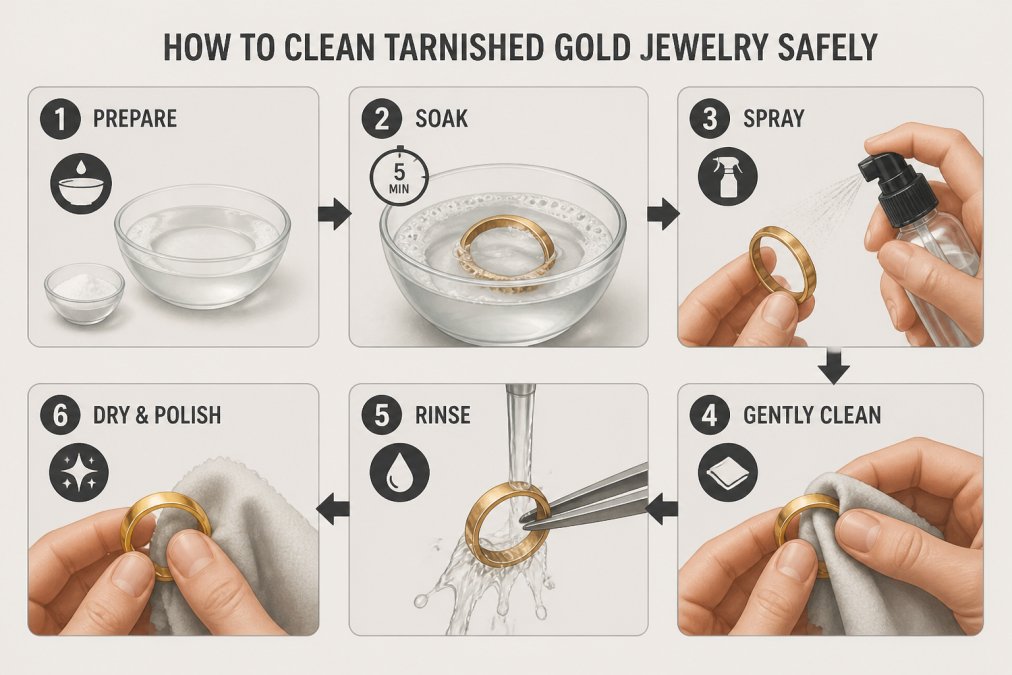
Avoid these methods:
- Harsh chemicals or bleach
- Steel wool or abrasive pads
- Ultrasonic cleaners on delicate stones
- Boiling water on vintage pieces
For stubborn tarnish, professional cleaning works better than home methods. Jewelers have specialized equipment that removes tarnish without scratching the metal. They can also check for loose stones or damage while cleaning.
How to Prevent Gold Jewelry from Tarnishing
Prevention is easier than cleaning. Simple habits keep your gold jewelry bright longer.
Store jewelry properly. Keep pieces in airtight containers or ziplock bags. Add silica gel packets to absorb moisture. Separate different pieces so they don't scratch each other. Store in a cool, dark place away from humidity.
Remove jewelry before activities. Take off rings before exercising, swimming, or showering. Sweat, chlorine, and soap all speed up tarnishing. Even brief exposure adds up over time.
Clean regularly. Wipe jewelry with a soft cloth after wearing it. This removes sweat, oils, and dust before they cause tarnish. Takes 30 seconds but makes a big difference.
Avoid contact with chemicals. Remove jewelry before applying perfume, lotion, or cosmetics. Let these products dry on your skin first if you forget. Don't wear jewelry while cleaning or doing yard work.
Keep humidity low. Use a dehumidifier in your bedroom or jewelry storage area. In Houston's climate, this helps significantly. Moisture is the enemy of gold alloys.
Rotate your pieces. Wearing different jewelry on different days spreads out the wear and tarnish. It also gives each piece time to "rest" between wearings.
Use anti-tarnish strips. These small packets absorb moisture and sulfur compounds. Drop one in your jewelry box or storage container. Replace them every few months.
For heirloom pieces you want to protect, the 7 Ways to Protect Inherited Jewelry guide walks through comprehensive care strategies. It covers storage, cleaning, and when to seek professional help.
Getting Professional Help for Tarnished Heirloom Pieces
Some pieces deserve professional restoration. Heirlooms, vintage jewelry, and pieces with delicate stones need expert care.
Professional jewelers have tools and expertise that home methods can't match. They can remove tarnish without scratching the metal. They inspect for loose stones, worn prongs, or hidden damage. They restore pieces to their original beauty safely.
At Eklektic in Houston, we handle restoration work daily. We see pieces that have been tarnished for years. We restore them to look nearly new. The process takes time but the results are worth it.
When to get professional help:
- Jewelry with delicate gemstones like opals or pearls
- Vintage or antique pieces
- Family heirlooms you want to preserve
- Jewelry with intricate designs that trap tarnish
- Pieces with loose stones or damaged settings
- Stubborn tarnish that won't come clean at home
Professional restoration also includes inspection. Jewelers check for structural problems. They tighten loose stones. They repair worn prongs. They make sure your jewelry is safe to wear.
The Benefits of Professional Jewelry Restoration article explains what happens during the restoration process. It covers cleaning, inspection, repairs, and protective finishing touches.
For finding a reliable jewelry repair shop, check reviews and ask about their experience with your type of jewelry. Eklektic offers guidance on finding a reliable jewelry repair shop. We also welcome customers from across the Houston area who want professional care for their treasured pieces.
Frequently Asked Questions
Does real gold tarnish?
Pure gold (24K) does not tarnish because it doesn't react with oxygen or moisture. However, most gold jewelry is an alloy, 14K or 18K gold mixed with other metals like copper, silver, or nickel. These metals can tarnish, causing discoloration on the surface of your gold jewelry. The lower the gold content, the more base metals present, and the faster tarnishing can occur.
Does 14K gold tarnish faster than 18K gold?
Yes, 14K gold typically tarnishes faster than 18K gold. 14K gold contains 58.3% pure gold and 41.7% other metals, while 18K gold contains 75% pure gold and only 25% other metals. Since tarnishing comes from the alloy metals, not the gold itself, 14K jewelry has more base metals that can react with oxygen, moisture, and chemicals, making it more prone to tarnishing.
Can sweat, perfume, or lotion make gold jewelry tarnish?
Yes. Sweat contains salts and acids that can accelerate tarnishing in gold alloys. Perfume and lotion often contain chemicals and alcohol that react with the base metals in gold jewelry. Chlorine from swimming pools is particularly damaging. Removing your gold jewelry before swimming, applying cosmetics, or exercising can significantly reduce tarnishing and keep your pieces looking brighter longer.
How often should I clean my gold jewelry to prevent tarnishing?
Regular gentle cleaning every 1-2 weeks helps prevent tarnish buildup. Use a plant-based jewelry cleaner like Eklektic's Natural Cleaning Spray, which is safe for most metals and gemstones and won't damage delicate stones. Store your jewelry in a dry place between cleanings to minimize exposure to moisture and air.
Gold jewelry tarnish is preventable with the right approach. Understanding why it happens helps you make better choices about storage and care. Whether you clean at home or seek professional restoration, your gold jewelry can stay beautiful for decades. At Eklektic, we're here to help you keep your pieces looking their best, and to restore them when tarnish does appear.
