

Table of Contents
- Why Secure Online Jewelry Shopping Matters
- How to Verify an Online Jewelry Store Before You Order
- Questions to Ask a Custom Jeweler
- Custom Jewelry Order Checklist
- Protecting Your Payment and Personal Data
- Custom Jewelry Shipping and Insurance
- What to Do When Your Custom Piece Arrives
- Frequently Asked Questions
Last Updated: October 10, 2026
Why Secure Online Jewelry Shopping Matters
Buying custom jewelry online carries real risk. You're committing significant money to a piece you can't hold, examine under natural light, or try on before it arrives.
The difference between a smooth transaction and a regrettable one often comes down to one thing: whether you verified the jeweler's credibility before placing your order.
Secure online jewelry shopping means confirming the studio actually creates what it claims, understanding their process, and knowing what happens if the finished piece doesn't meet your expectations.
How to Verify an Online Jewelry Store Before You Order
Check for Studio Credentials and Transparency
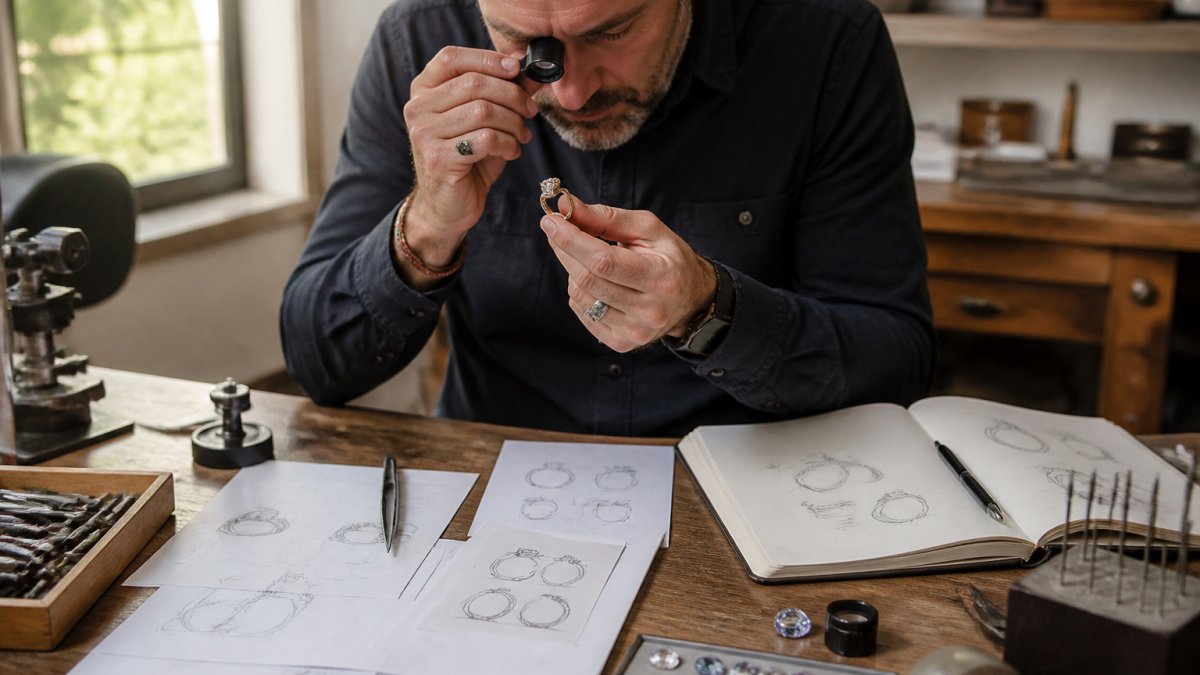
A legitimate custom jewelry studio should clearly explain where work happens and whether they have a physical location. Can you see photos or videos of their workspace?
Check whether they offer video consultations. This signals they're willing to work directly with you and confident in their process.
Look for certifications, industry affiliations, gemological credentials, or years of documented experience.
Review Customer Feedback and Track Record
Check multiple review platforms and look for patterns in what customers say about custom work, not just star ratings.
Reviews mentioning design collaboration, communication, and problem-solving are especially valuable.
Watch for how the jeweler responds to negative reviews. A studio that engages thoughtfully with criticism shows they care about customer satisfaction.
Questions to Ask a Custom Jeweler
Design Process and Approval Timeline
How many design revisions are included, and at what point does the jeweler start making the piece?
How long does the entire process take from consultation to delivery?
What happens if you want changes after design approval?
Materials, Gemstones, and Craftsmanship
Ask about available metals, ethical sourcing, purity, and weight.
For gemstones, ask whether the jeweler sources them or works with suppliers, and whether they can provide quality documentation.
Ask how stones are set and what finishing techniques they use.
Custom Jewelry Order Checklist
Before you commit to an order, verify these items:
- Jeweler has a physical studio location and offers video consultations
- Customer reviews mention positive experiences with custom work
- Written agreement specifies design revisions, timeline, and total cost
- Payment plan is clear (deposit amount, payment schedule, final payment timing)
- Materials and gemstones are documented in writing with sourcing details
- Return or modification policy is stated explicitly
- Shipping and insurance coverage are included and documented
- You have a point of contact for questions during the creation process
Protecting Your Payment and Personal Data
Secure payment is the foundation of safe custom jewelry ordering. Beyond the basics, you need to verify that the jeweler's checkout process meets modern security standards and that your personal information is handled responsibly.
Verify Secure Checkout Indicators
Before entering payment details, confirm the website uses HTTPS encryption. Look for the padlock icon in your browser's address bar. If it's missing or shows a warning, do not proceed.
Check for security badges from recognized validators like Norton Secured, McAfee Secure, or Trustwave. Click through to confirm the certificate is current.
Reputable jewelers display which payment gateway they use during checkout, signaling they use an established processor.
Understand Account Security and Data Storage
If the jeweler requires an account, ask whether they offer two-factor authentication (2FA). A studio that offers 2FA demonstrates they take account security seriously.
Ask how long the jeweler retains your personal information after the order and whether they share it with third parties.
Ask whether they would notify you of a data breach and whether they carry cyber liability insurance.
Avoid Unnecessary Information Requests
A jeweler needs your name, email, phone, shipping address, and design preferences. They should not ask for your Social Security number, driver's license, or financial account details.
If a jeweler requests unusual personal information, ask why. A legitimate answer might be "We use this for insurance documentation" or "Our gemstone supplier requires this for high-value stones." If the answer is vague or defensive, consider shopping elsewhere.
Choose Payment Methods with Buyer Protection
Credit cards and PayPal both offer dispute resolution if the jeweler fails to deliver or the piece arrives damaged or misrepresented. If you pay by credit card, you can file a chargeback with your card issuer within a set window (typically 60-120 days). PayPal's Buyer Protection covers items not received or significantly not as described.
Avoid wire transfers, bank transfers, or cryptocurrency for custom orders. These payment methods offer no recourse if something goes wrong. Once the money leaves your account, you have no mechanism to recover it if the jeweler disappears or delivers a substandard piece.
If the jeweler requires a deposit, use the same protected payment method. Ask what percentage is required and when it's due. A typical deposit for custom jewelry is 25-50% upfront, with the balance due before shipping. Get this in writing.
Document All Communications
Keep copies of every email, design approval, payment receipt, and agreement. Screenshot the product page, the final design proof, and the checkout confirmation. If a dispute arises, these records prove what was promised and what you paid for. Many payment processors and dispute-resolution services require documentation to rule in your favor.
Custom Jewelry Shipping and Insurance
Shipping a custom piece is the final and most vulnerable stage of the transaction. A high-value, irreplaceable item requires more than standard mail service. You need to verify insurance coverage, understand the declared value, and know exactly what happens if something goes wrong in transit.
Confirm Shipping Method and Carrier
Ask the jeweler which carrier they use: USPS, UPS, FedEx, or a specialty courier. Each has different reliability, tracking, and insurance options. For custom jewelry valued above $500, insured courier service (UPS or FedEx) is standard; USPS Priority Mail or First Class is not sufficient for high-value items.
Verify that signature is required upon delivery. This proves the piece was received by you or an authorized recipient and prevents theft from a porch or mailbox. Ask whether the jeweler will require an adult signature (typically for items over a certain value) or if a household member can sign.
Confirm that the jeweler covers shipping costs or clearly states the shipping fee upfront. Some studios include insured shipping in the price; others charge separately. Get this in writing before you approve the final design.
Understand Insurance Coverage and Declared Value
Ask whether the jeweler's insurance covers the piece during transit or whether you need to arrange your own. Most reputable custom jewelers carry insurance that covers items they've created from the moment they ship until delivery. However, the coverage limit may not match the full value of your piece.
The declared value is critical. This is the amount the jeweler (or you, if you're arranging insurance) states the piece is worth. If the piece is lost or damaged, the insurance payout is limited to the declared value. Ask the jeweler how they determine declared value.
If the jeweler uses a third-party shipper or insurance provider, ask for the name and policy details. You can then verify coverage limits and exclusions directly with the provider. Some insurance policies exclude certain gemstones or materials, or cap coverage at a specific amount per shipment.
Request Proof of Insurance and Tracking
Before the piece ships, ask the jeweler to provide proof of insurance. This might be a copy of their insurance certificate, a shipper's declaration of value, or a tracking number linked to an insured shipment. You should receive this before the package leaves their studio.
Once shipped, get the tracking number immediately. Track the shipment regularly. Most carriers provide real-time updates via email or their website. If the tracking shows the package is delayed, lost in transit, or marked as undelivered, contact the jeweler and the carrier right away.
Know What to Do If the Piece Arrives Damaged or Lost
If the package arrives and the piece is damaged, do not sign for it if possible. Refuse delivery or note "Received Damaged" on the signature form. Take photos of the damaged packaging and the piece itself. Contact the jeweler and the carrier within 24 hours with photos and a written description of the damage.
The jeweler and their insurance should file a claim with the carrier. This process typically takes 1-4 weeks. In the meantime, ask the jeweler whether they will repair the piece, remake it, or issue a refund while the claim is pending. A reputable studio will not leave you waiting indefinitely.
If the package is lost in transit (tracking shows it was in transit but never arrived), the jeweler should file a claim with the carrier within the timeframe specified in the shipping agreement (usually 30 days). Again, ask what the jeweler will do while the claim is being investigated.
Insure High-Value Pieces Yourself
For pieces valued above $2,000, consider arranging your own insurance in addition to the jeweler's coverage (Special coverage for jewelry and other valuables). Contact your homeowner's or renter's insurance provider and ask about adding a rider for the custom piece. This provides a second layer of protection and ensures you have direct recourse with your own insurer if something happens.
Alternatively, some jewelers can arrange additional insurance through specialty carriers that cover jewelry in transit and at home. Ask whether this option is available and what the cost is.
Document Receipt and Condition
When the piece arrives, inspect it immediately in good natural light. Check that it matches the approved design, that all stones are secure, and that there are no visible damage, scratches, or defects. Take photos or video of the piece in its packaging and out of the box.
If everything looks correct, sign for the package and keep all documentation: the tracking number, the shipping label, the insurance certificate, and your photos. Store these records with your receipt and design approvals. If you ever need to file a claim, repair the piece, or have it appraised for insurance purposes, these records will be essential.
What to Do When Your Custom Piece Arrives
When your custom jewelry arrives, inspect it immediately. Check that it matches the approved design, that all stones are secure, and that the craftsmanship meets your expectations.
Many custom jewelers offer a review period. Eklektic, for example, provides a review period so you can be completely satisfied before the transaction is final.
If something isn't right, document the issue with photos and contact the jeweler immediately. Don't wait weeks to raise concerns. A responsive studio will work with you to resolve problems.
Keep all documentation, receipts, design approvals, photos, and insurance papers. These records protect you if you ever need repairs, appraisals, or insurance claims later.
Buying custom jewelry online doesn't have to feel risky. When you verify the jeweler's credentials, understand their process, and ask the right questions upfront, you protect yourself and increase the odds of getting exactly what you envisioned.
Frequently Asked Questions
How can I tell if an online jewelry store is trustworthy?
Look for transparent information about the studio's location, team credentials, and in-house capabilities. Verify they display customer reviews on independent platforms, offer clear communication channels (phone, email, video consultation), and provide detailed policies on custom orders, revisions, and returns. A trustworthy store will also explain their design process upfront and show examples of completed work.
What should I ask a custom jeweler before placing an order?
Ask about the design approval process, timeline, and revision policy. Inquire about materials and gemstone sourcing, whether stones are conflict-free, and how they verify quality. Request information on payment terms, deposit requirements, and what happens if you're not satisfied with the final piece. Also ask how they handle shipping, insurance, and whether they offer a review period after delivery.
Is custom jewelry made with real gemstones and precious metals?
Legitimate custom jewelry studios use authentic materials, genuine gemstones and precious metals like gold, platinum, and sterling silver. Before ordering, ask the jeweler to specify the metal type and purity, gemstone origin, and certifications. Request documentation of materials in your order agreement. Studios that fabricate in-house can show you exactly what materials they use and provide transparency that mass-market retailers often cannot.
What should I do if my custom jewelry order doesn't match my expectations?
Review the piece carefully when it arrives, comparing it to your approved design. Most reputable custom jewelers offer a review period to assess the work. If there's a genuine discrepancy between the approved design and the finished piece, contact the studio immediately with photos. If the piece truly doesn't meet specifications, a professional studio will work with you to make it right.