

Table of Contents
- Metal Comparison Table for Custom Engagement Rings
- Platinum vs Gold Engagement Ring: Strength and Durability
- 14K vs 18K Gold Engagement Ring: Which Karat Level Lasts Longer
- White Gold vs Platinum Ring: Everyday Wear Performance
- Hypoallergenic Engagement Ring Metals for Sensitive Skin
- Maintenance and Long-Term Care by Metal Type
- How to Choose the Right Metal for Your Lifestyle
- Conclusion
- Frequently Asked Questions
Last Updated: October 6, 2026
Metal Comparison Table for Custom Engagement Rings
Selecting the right metal for a custom engagement ring affects durability, appearance, maintenance, and long-term wearability. At Eklektic, we match the right precious metal to each client's lifestyle, design vision, and budget.
The best metal types for durable custom engagement rings each bring distinct strengths. Platinum offers unmatched durability and density. Gold, in 14K and 18K, balances workability with solid durability. White gold pairs gold's warmth with a silvery look. Rose gold is prized for its warm, romantic tone. Each behaves differently under daily stress and carries different long-term costs.

Here's a quick comparison of how the main precious metals stack up:
| Metal Type | Durability | Everyday Wear | Maintenance | Best For |
|---|---|---|---|---|
| Platinum | Highest density, extremely resistant to wear | Excellent, minimal scratching | Low, rarely needs replating | Active lifestyles, heirloom pieces |
| 14K Gold | Durable alloy, good strength | Very good, some visible scratching over time | Moderate, occasional polishing | Balance of durability and design flexibility |
| 18K Gold | Softer than 14K, more pure gold | Good, shows scratches more readily | Moderate, regular polishing recommended | Those prioritizing gold purity and warmth |
| White Gold | Durable when alloyed properly | Good, requires rhodium plating maintenance | Higher, replating every 1-2 years | Classic look with lower cost than platinum |
| Rose Gold | Durable alloy with copper content | Good, copper tarnish can develop | Moderate, polishing maintains shine | Vintage and romantic aesthetics |
Platinum vs Gold Engagement Ring: Strength and Durability
Platinum and gold represent the two dominant choices for durable custom engagement rings, but they perform very differently under daily wear.
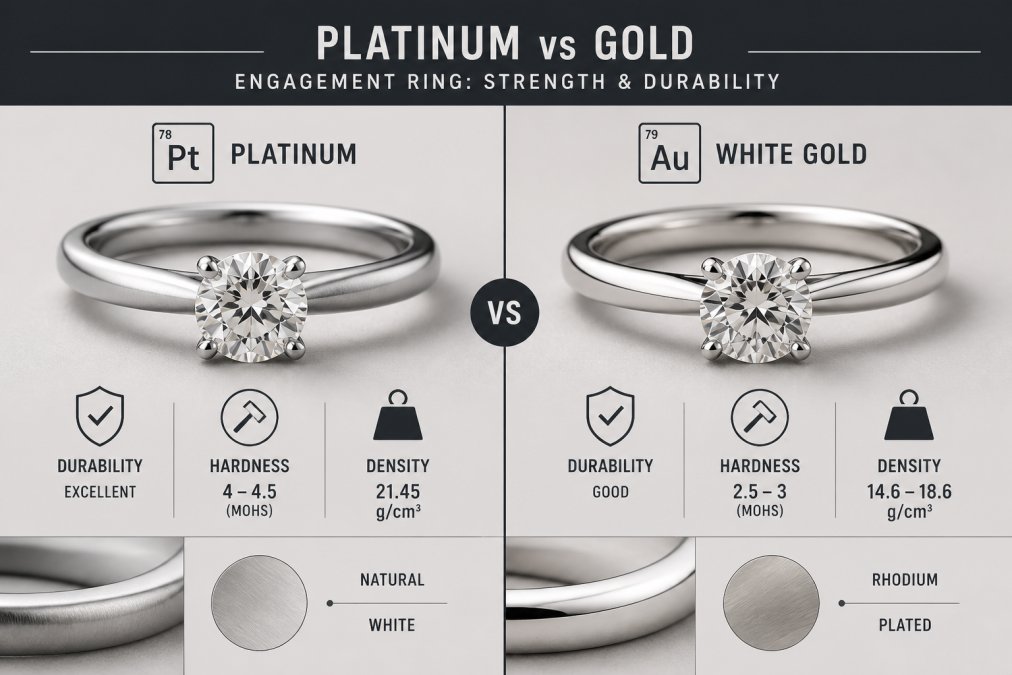
Platinum is denser and heavier than gold, feeling noticeably more substantial on the finger. That density makes it extremely resistant to scratching and deformation.
Gold's durability depends on karat weight. Pure gold (24K) is too soft for engagement rings, so rings use alloyed gold, typically 14K or 18K, mixed with stronger metals like copper, silver, or palladium.
Gold rings are also more affordable than platinum. A platinum ring typically costs 50-70% more than the same design in 14K gold, depending on weight and design complexity.

The real difference comes down to lifestyle. If you work with your hands, exercise frequently, or prefer minimal maintenance, platinum's scratch resistance and lack of replating make it the practical choice.
14K vs 18K Gold Engagement Ring: Which Karat Level Lasts Longer
The choice between 14K and 18K gold balances durability against gold content and design flexibility.
14K gold contains 58.3% pure gold mixed with stronger alloy metals, making it harder and more scratch-resistant than 18K. The higher alloy content also makes it easier for jewelers to cast complex designs, set stones securely, and resize without breakage.

18K gold contains 75% pure gold, giving it a richer, warmer color many people prefer (Buying Platinum, Gold, and Silver Jewelry). The lower alloy content makes it softer and more prone to visible scratching, though some jewelers prefer its malleability for certain styles.
For everyday wear, 14K gold is the more practical choice: it resists scratching better, holds stone settings more securely, and is easier to resize or repair.
If you prefer maximum gold content and don't mind visible wear, 18K is a legitimate choice, though you'll see scratches more readily and maintenance matters slightly more.
White Gold vs Platinum Ring: Everyday Wear Performance
White gold and platinum look similar but are fundamentally different metals with different performance characteristics.
White gold is yellow gold alloyed with white metals (palladium, nickel, or silver) to change its color. Because it's still primarily gold, it scratches more easily than platinum and requires maintenance.
Platinum is a pure precious metal that doesn't require plating and maintains its natural silvery-white color indefinitely. It's harder and denser than white gold, making it more resistant to scratching and deformation.
The trade-off is cost. Platinum rings cost significantly more than white gold because platinum is rarer and heavier, weighing roughly 60% more than the same design in white gold.
For everyday wear, platinum performs better: no replating maintenance, and more effective scratch resistance. If you're active, work with your hands, or prefer minimal maintenance, platinum's durability advantage justifies the higher cost.
White gold is an excellent choice if you want the white metal aesthetic at a lower price point and don't mind periodic replating.
Hypoallergenic Engagement Ring Metals for Sensitive Skin
Precious metal allergies are real and more common than many people realize. The most frequent culprit is nickel, which appears in many white gold alloys.
Platinum is hypoallergenic. It's a pure metal that doesn't contain nickel or other common allergens, and it doesn't react with skin oils or sweat. If you have metal sensitivity, platinum is the safest choice.
Yellow and rose gold are generally hypoallergenic in pure form, but the alloy metals matter. A 14K yellow gold ring typically contains copper and silver, both well-tolerated by most skin.
White gold is where allergies most commonly occur. Many white gold alloys use nickel as the whitening agent, and nickel is a common allergen.
Sterling silver, while beautiful, isn't recommended for engagement rings worn daily. Silver is too soft and will scratch, dent, and wear quickly under everyday stress, and some people develop sensitivity to it over time.
When designing a custom engagement ring, always disclose any known metal sensitivities to your jeweler.
Maintenance and Long-Term Care by Metal Type
How you maintain your engagement ring affects how it looks and performs over decades of wear.
Platinum requires the least maintenance of any precious metal. It doesn't tarnish, need replating, or fade, and cleans with warm soapy water and a soft brush. Scratches develop a natural patina many people appreciate.
14K and 18K Gold benefit from regular gentle cleaning and occasional professional polishing. Avoid harsh chemicals and ultrasonic cleaners, which can loosen stone settings; a soft brush with warm soapy water works for routine cleaning.
White Gold demands more attention. Rhodium plating wears away gradually, requiring professional replating every 12-24 months to maintain the bright white appearance. Avoid chlorine and harsh chemicals, which accelerate plating wear.
Rose Gold is relatively low-maintenance. The copper content that gives rose gold its color can develop a slight patina over time, which some people find beautiful and others prefer to polish away. Clean it gently with warm soapy water. Avoid harsh chemicals.
How to Choose the Right Metal for Your Lifestyle
Your daily activities, preferences, and budget should all inform your metal choice.
Choose platinum if:
- You work with your hands or exercise frequently
- You prefer minimal maintenance and no replating
- You want the ring to look essentially unchanged 20 years from now
- Budget allows for the higher initial cost
- You have metal sensitivities or nickel allergies
Choose 14K gold if:
- You want a balance of durability, affordability, and design flexibility
- You appreciate the warmth of gold and don't mind visible patina developing
- You prefer a lower price point than platinum
- You want a metal that's easy for jewelers to work with for intricate designs
- You're comfortable with occasional professional polishing
Choose 18K gold if:
- You prioritize gold purity and the rich color of higher-gold-content metal
- You're willing to accept more visible scratching over time
- You prefer the aesthetic warmth of gold and don't mind developing patina
- You may eventually melt down or completely redesign the ring
Choose white gold if:
- You love the white metal aesthetic but need a lower budget than platinum
- You're comfortable with replating maintenance every 12-24 months
- You confirm the alloy uses palladium (not nickel) if you have sensitive skin
- You understand that replating is an ongoing cost
Choose rose gold if:
- You prefer the romantic, warm tone of rose gold
- You're comfortable with the copper content and any potential patina
- You like the vintage or contemporary aesthetic rose gold provides
The right choice isn't about which metal is objectively "best"; it's about matching the metal to your life. A platinum ring is wasted on someone who prefers gold's warmth and doesn't mind visible wear, and a delicate 18K ring is impractical for someone in construction. Your lifestyle, aesthetic preferences, and budget together point to the right metal.
When you work with a custom jewelry studio like Eklektic, the design process includes this conversation. We ask about your daily activities, feelings about maintenance, and aesthetic preferences, and that context shapes the metal recommendation so the final ring is both beautiful and practical for your actual life.
Conclusion
The best metal types for durable custom engagement rings depend on balancing durability, appearance, maintenance, and cost against your lifestyle and preferences. Platinum offers unmatched durability with almost no maintenance. 14K gold provides excellent durability at a lower cost with beautiful warmth. 18K gold prioritizes gold purity and warmth. White gold delivers the white metal look at a lower price than platinum, though it requires periodic replating.
When designing a custom engagement ring, your metal choice is as important as the design itself. It affects how the ring looks in 5, 15, and 50 years, determines your maintenance rhythm and long-term costs, and impacts comfort and safety if you have metal sensitivities.
At Eklektic, we combine traditional craftsmanship with modern jewelry technology to create custom engagement rings designed, made, and finished in our studio. Whether you choose platinum for durability, gold for warmth, or another precious metal, we'll craft a ring that becomes a cherished heirloom. Book an appointment to begin designing your custom engagement ring today.
Frequently Asked Questions
Which metal is most durable for an engagement ring?
Platinum and 14K gold are the most durable metals for engagement rings worn daily. Platinum is naturally harder and denser, resisting scratches and dents better than gold. However, 14K gold offers excellent durability because it contains more alloy metals mixed with pure gold, making it stronger than 18K gold. The choice depends on your lifestyle: platinum requires less maintenance but costs more, while 14K gold is more affordable and still highly resistant to everyday wear.
Is platinum or gold better for a custom engagement ring?
Platinum is superior for durability and scratch resistance, making it ideal if you want a ring that maintains its appearance with minimal maintenance. Gold, particularly 14K, offers excellent durability at a lower price point and is easier to resize and repair. For custom engagement rings, platinum works best if you prioritize longevity and low maintenance, while gold suits those who want flexibility in design modifications and more affordable pricing. Both are excellent choices; the best metal depends on your budget, maintenance preferences, and design vision.
What is the best gold karat for an engagement ring worn every day?
14K gold is the best choice for daily-wear engagement rings. It balances durability with purity: 14K contains 58.3% pure gold mixed with stronger alloy metals, making it harder and more scratch-resistant than 18K gold (which is 75% pure). While 18K gold has a richer color, 14K gold withstands daily contact, cleaning, and resizing better. For custom rings, 14K gold holds stone settings securely and resists bending, making it the industry standard for engagement and wedding rings.
Can a custom engagement ring be made with a metal that is durable and hypoallergenic?
Yes. Platinum is naturally hypoallergenic because it is a pure precious metal that doesn't contain nickel or other common allergens. 14K white gold can be hypoallergenic if crafted with nickel-free alloys, palladium and silver are used instead to strengthen the gold without triggering sensitivities. When designing a custom ring, specify your metal allergies with your jeweler so they can select appropriate alloy combinations. Eklektic works directly with clients to ensure custom rings use metals that match both durability and skin sensitivity needs.
Is 14-karat gold more durable than 18-karat gold?
Yes, 14K gold is more durable than 18K gold for engagement rings. 14K gold contains 58.3% pure gold and 41.7% alloy metals, while 18K contains 75% pure gold and only 25% alloy. The higher alloy content in 14K makes it harder, more scratch-resistant, and better at holding stone settings securely. 18K gold is softer and more prone to bending and scratching during daily wear. For custom engagement rings designed for everyday use, 14K gold is the superior choice despite 18K's richer color.