

Table of Contents
- What Makes a Gemstone Suitable for Everyday Wear
- Durable Gemstones for Engagement Rings: A Comparison
- Sapphire Engagement Ring Durability: Why It Leads
- Emerald Engagement Ring Care: Keeping It Beautiful
- Protective Engagement Ring Settings for Daily Wear
- Choosing Your Gemstone: Key Factors to Consider
- Frequently Asked Questions
Last Updated: October 18, 2026
What Makes a Gemstone Suitable for Everyday Wear
When selecting the 7 best gemstones for everyday engagement rings, you must balance beauty with durability and practicality. The best gemstones for everyday engagement rings withstand daily contact, resist scratching, and hold their brilliance without constant professional care.
Hardness is the primary factor. On the Mohs scale, which measures scratch resistance, a rating of 7.5 or higher is ideal for rings worn constantly, the threshold separating stones that handle daily life from those needing protective settings and careful handling.
Stability matters too. Some gemstones are prone to internal fractures or chemical changes when exposed to heat, light, or cleaning. A truly wearable stone combines durability with low maintenance.
At Eklektic, we design engagement rings around stones that balance these practical considerations with visual impact.
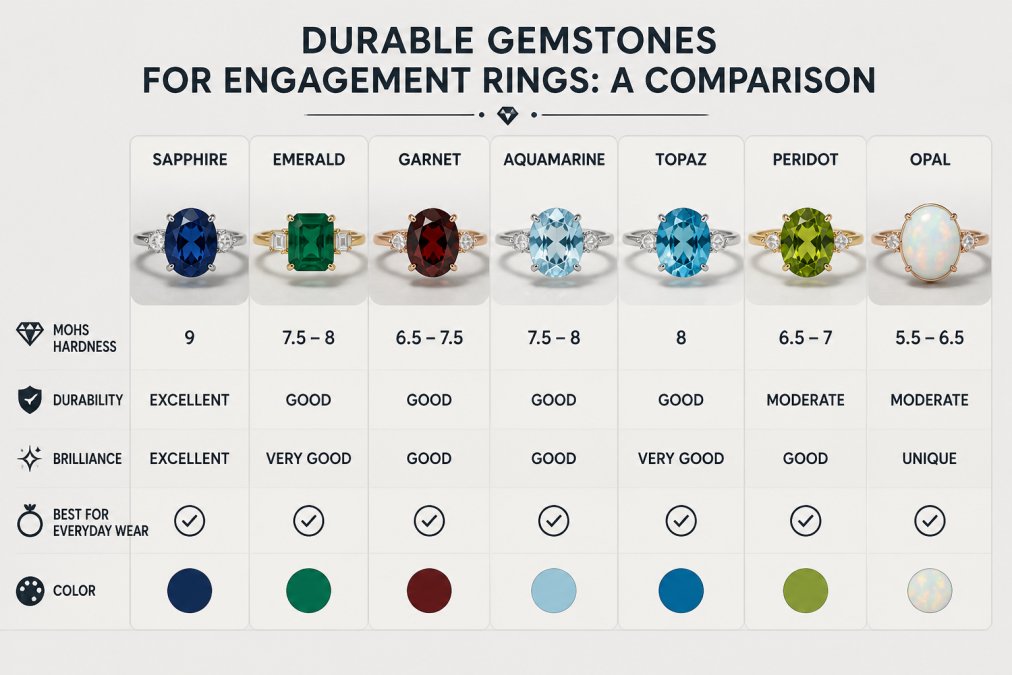
Durable Gemstones for Engagement Rings: A Comparison
The 7 best gemstones for everyday engagement rings represent the best choices for everyday wear, each with distinct advantages and trade-offs. Here's how they compare on the characteristics that matter most.
| Gemstone | Hardness | Daily Wear Suitability | Maintenance Level | Color Range |
|---|---|---|---|---|
| Blue Sapphire | 9 | Excellent | Low | Deep blue to light blue |
| Emerald | 7.5-8 | Good | High | Green to blue-green |
| Garnet | 7-7.5 | Good | Low | Red, burgundy, orange |
| Aquamarine | 7.5-8 | Good | Low | Light blue to blue-green |
| Blue Topaz | 8 | Excellent | Low | Sky blue to deep blue |
| Peridot | 6.5-7 | Fair | Moderate | Bright green to yellow-green |
| Opal | 5.5-6.5 | Fair | High | Multi-colored with fire |
Blue Sapphire: The Timeless Classic
Blue sapphire ranks as the most durable choice for everyday engagement rings, second only to diamond at a 9 on the Mohs scale. Sapphires resist scratching from daily contact and maintain their polish without frequent professional maintenance.

Sapphires come in nearly every color, but classic deep blue remains the most popular for engagement rings. The color is stable under normal light, won't fade, and resists common cleaning methods.
What sets sapphire apart is predictability.
Eklektic offers several blue sapphire engagement rings, including the 14kw Blue Sapphire Ring with Diamond Halo featuring a 2.10-carat oval sapphire with complementary diamonds. The halo amplifies the visual impact without requiring an enormous stone.
Emerald: Elegant with Special Care Needs
Emerald presents a different equation. At 7.5 to 8 on the Mohs scale, it's reasonably hard but softer than sapphire. The real challenge isn't scratching, it's internal fractures.
Most emeralds contain natural inclusions and fractures that make them vulnerable to cracking from sudden temperature changes, harsh chemicals, or hard impacts, so they need careful handling and protective settings (gia.edu).
Emerald's rich green is stunning and distinctive. Its appearance shifts subtly with the light source, part of its appeal, but it means beauty depends on where and how you wear it.
If you choose emerald, plan for regular professional care: periodic cleaning with mild soap and lukewarm water (never ultrasonic or steam), and eventual repolishing or resealing of fracture treatments.
The 14kw Emerald and Diamond Ring from Eklektic features a 0.44-carat oval emerald set with diamonds in white gold. The protective setting helps guard the emerald from damage.

Garnet: Bold Color and Everyday Strength
Garnet sits at 7 to 7.5 on the hardness scale, reasonably durable for everyday wear. Its appeal is bold, distinctive color, deep reds and burgundies that stand out from traditional sapphire or diamond choices.
Garnets are relatively stable. They don't fracture easily like emeralds and resist damage from normal cleaning and temperature changes, offering genuine practicality for a unique ring.
The trade-off: garnets are slightly softer than sapphires and emeralds, so they scratch more easily.
Garnet's deep red color creates a sophisticated, distinctive look for someone who wants something different from mainstream stones. Eklektic offers the 14kw Diamond and Rhodolite Garnet Ring, featuring a 6mm round cabochon rhodolite garnet with diamonds in white gold; the cabochon cut emphasizes the deep color and creates a vintage-inspired aesthetic.
Aquamarine: Serene Blue for Daily Wear
Aquamarine ranks at 7.5 to 8 on the hardness scale and offers excellent everyday wearability. It's stable under normal conditions, doesn't fracture easily, and resists damage from cleaning and temperature changes.
What distinguishes aquamarine is its soft, serene blue, lighter and more delicate than sapphire's deep blue, and the color stays stable under different lighting, indoors or outdoors.
Aquamarine is also relatively affordable compared to sapphire or emerald, making a substantial stone accessible.
The 14kw Aquamarine Ring with Diamond Halo from Eklektic features a 1.40-carat aquamarine in an emerald cut with a diamond halo. The halo amplifies the stone's presence.
Blue Topaz: Vibrant and Affordable
Blue topaz rates at 8 on the hardness scale, one of the most durable options for everyday engagement rings, harder than aquamarine and emerald, and without emerald's fracture vulnerability.
Blue topaz offers vibrant blue that rivals sapphire in intensity at a fraction of the cost, and it's widely available, affordable, and consistent in quality.
The trade-off: blue topaz can fade with prolonged direct sunlight over many years, rare with normal wear and not a practical concern for most people wearing rings primarily indoors or in variable light.
The 14kw Blue Topaz Ring with Diamond Halo from Eklektic showcases a 4.80-carat cushion-cut blue topaz with a diamond halo. The substantial stone size is possible because blue topaz is affordable.

Peridot: Bright Green with Moderate Durability
Peridot sits at 6.5 to 7 on the hardness scale, the softest option on this list. It can be worn daily but requires more care than sapphire, topaz, or aquamarine, plus protective settings that minimize contact with hard surfaces.
Peridot's bright, lime-green color is distinctive and stable under normal light. It's also affordable, making larger stones accessible.
The challenge: peridot demands conscious care, remove your ring during gardening, exercise, or washing dishes. For someone willing to take these precautions, it offers unique beauty; for constant, thoughtless wear, it isn't ideal.
The 14kw Peridot and Diamond Ring from Eklektic features a 0.45-carat oval peridot with diamonds. The protective setting helps guard the softer stone from damage.
14kw Blue Sapphire Ring with Diamond Halo →
Opal: Stunning but Requires Attention
Opal ranks at 5.5 to 6.5 on the hardness scale, the most delicate option for engagement rings. It's porous and sensitive to temperature changes, moisture, and chemicals, and can crack if exposed to sudden shifts or dry environments.
What makes opal extraordinary is its play-of-color, the internal light and rainbow flashes that make each stone unique. Opal rings are for people who prioritize beauty and uniqueness over practicality.
If you choose opal, understand it requires dedicated care: remove it before showering, swimming, or exercising, store it in a humid environment to prevent cracking, and clean only with mild soap and water. For someone willing to provide this care, the beauty justifies the effort.
The 14ktt Opal Ring from Eklektic features a 0.90-carat marquise opal in a delicate setting. This is a ring for someone who wants something genuinely special.
Sapphire Engagement Ring Durability: Why It Leads
Blue sapphire dominates the engagement ring market for a reason: exceptional durability with stunning color and availability. At 9 on the hardness scale, second only to diamond, it resists scratching and maintains its polish through decades of daily wear.
That durability translates to practical freedom.
Beyond hardness, sapphire offers stability: it doesn't fracture easily, and resists damage from temperature changes and cleaning methods.
Sapphire also maintains its appearance. After years of wear it looks essentially unchanged, the deep color doesn't shift or fade, and the brilliance remains consistent.
Emerald Engagement Ring Care: Keeping It Beautiful
If you choose emerald for your engagement ring, it requires a different approach to care than harder gemstones.
Most emeralds are treated with oils or resins that fill surface fractures. These treatments improve appearance and stability but aren't permanent; oils can evaporate or resins break down, especially with harsh cleaning or extreme conditions.
Hand washing is the only safe cleaning method: lukewarm water and mild dish soap, a soft brush, thorough rinse, and immediate pat dry. Never use ultrasonic cleaners, steam cleaners, or harsh chemicals, which can force water into fractures and cause cracking.
Store your emerald ring in a cool, stable environment, away from extended direct sunlight that can dry out treatment oils, and keep it in a soft pouch when not worn to minimize dust and bumps.
Annual professional inspections catch problems early; a jeweler can assess fracture treatments.
Protective Engagement Ring Settings for Daily Wear
The setting matters as much as the gemstone when you'll wear your ring daily.
Bezel settings surround the stone with a rim of metal, protecting the edges and crown from hard surfaces.
Halo settings surround the center stone with a circle of smaller diamonds or gemstones. They don't offer bezel-level edge protection, but they elevate the center stone slightly to reduce direct contact and make a smaller stone appear larger.
Solitaire settings expose more of the center stone but offer a timeless look. They work well for harder stones like sapphire or topaz, but are riskier for softer stones.
The metal also affects durability. Platinum is harder and more durable than gold, making it excellent for daily-wear rings; it resists denting and scratching better.
At Eklektic, our custom design process considers both your stone choice and lifestyle, designing protective settings for a delicate emerald or a durable sapphire alike.
Choosing Your Gemstone: Key Factors to Consider
The best gemstone for your engagement ring depends on three factors: how you live, what you value aesthetically, and how much maintenance you're willing to provide.
Lifestyle and activity level matter most. If you exercise regularly, work with your hands, or risk bumps, choose a harder stone like sapphire, topaz, or aquamarine.
Maintenance commitment shapes the practical reality. Sapphire and topaz need minimal care beyond normal cleaning, emerald demands regular professional attention, and opal requires dedicated care and storage.
Budget considerations are real. Sapphire and emerald command higher prices than aquamarine, topaz, or garnet.
There's no single "best" gemstone for everyday engagement rings, only the best choice for your life, preferences, and commitment to care.
Choosing the right gemstone for your everyday engagement ring is one of the most important jewelry decisions you'll make.
Book an appointment with our team to discuss your gemstone preferences and explore custom design options that match your vision and lifestyle.
Frequently Asked Questions
What is the most durable gemstone for an everyday engagement ring?
Sapphire ranks among the hardest gemstones, scoring 9 on the Mohs hardness scale, making it ideal for daily wear. Its durability means it resists scratching and maintains its brilliance through years of constant contact. Blue sapphire engagement rings, like the 14kw Blue Sapphire Ring with Diamond Halo available at Eklektic, combine this exceptional durability with timeless beauty.
Can you wear an emerald engagement ring every day?
Emeralds are more delicate than sapphires and require intentional care for everyday wear. They rank 7.5-8 on the Mohs scale and often contain inclusions that make them prone to chipping. Daily-wear emerald rings need protective settings and regular maintenance. If you love emeralds, choose a bezel or halo setting for added protection, and remove the ring during activities that risk impact.
Which gemstones are suitable for daily wear in an engagement ring?
Sapphire, garnet, aquamarine, blue topaz, and peridot all work for everyday engagement rings. Emeralds and opals require more careful handling. Durability depends on hardness (how resistant to scratching) and toughness (how resistant to chipping). Sapphires and garnets lead in durability, while softer stones like opal need protective settings and conscious care to avoid damage during regular activities.
What ring setting is best for protecting a gemstone in everyday engagement rings?
Bezel settings, halo designs, and three-stone arrangements offer maximum protection by surrounding or cradling the center stone. These protective engagement ring settings reduce direct impact exposure and minimize chipping risk. Bezel settings completely encircle the stone's edge, while halo designs use smaller diamonds to frame and shield the gemstone. For softer stones like emerald or opal, these protective settings are essential for daily wear.